

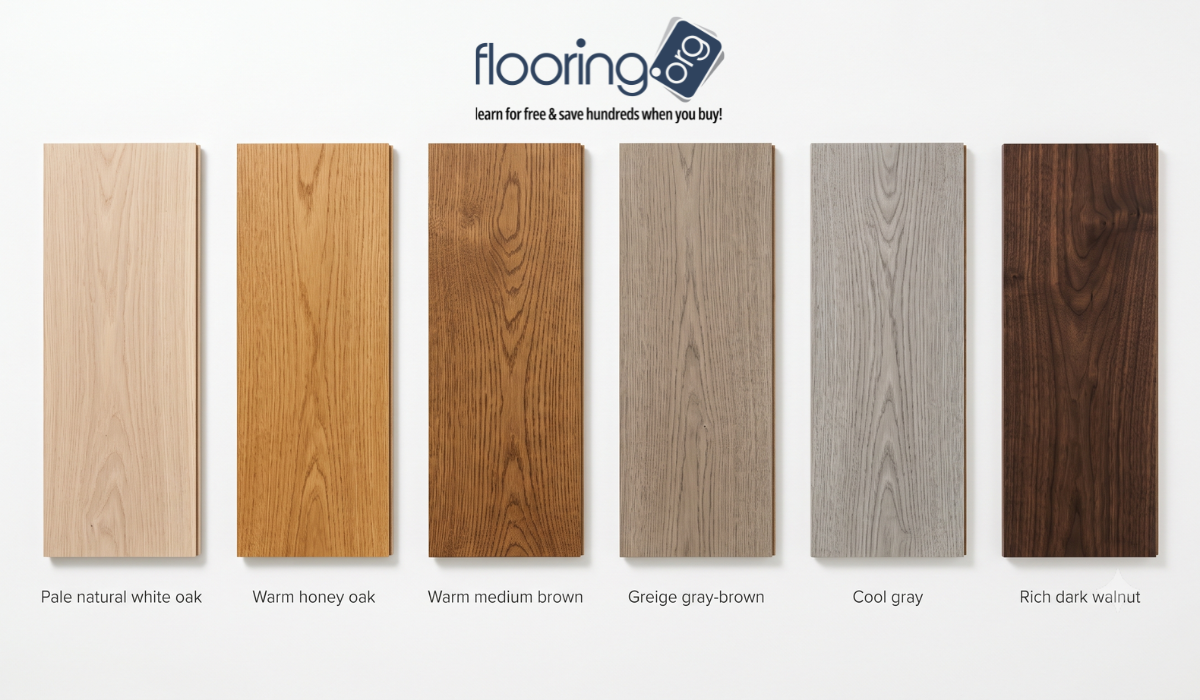
Hardwood floor color is the single most visible design decision in a room, influencing how large the space feels, how warm or cool the light reads, and how well the floor ages with your decor over time. With natural finishes, gray tones, and wide-plank formats dominating current hardwood flooring trends, buyers have more options than ever and more room for costly mistakes. This guide gives you the framework professionals use to match floor color to a real space, with confidence. For a full introduction to hardwood selection, the complete hardwood flooring guide at Taite Floor.org is worth reading before you finalize any decision.
What Actually Determines How a Floor Color Looks in Your Home
Light Changes Everything
The single most underestimated factor in hardwood floor color selection is light, both the quantity and the direction of it. A floor sample that reads as warm honey in a showroom can look orange in a south-facing room flooded with afternoon sun, or gray-brown in a north-facing room with indirect light all day.
Before ordering samples, note which direction your room faces and at what times of day you use it most. South- and west-facing rooms intensify warm tones. North and east-facing rooms cool them down. A wire-brushed white oak with a warm straw tone will look significantly different under each condition.
This is the primary reason Taite Floor.org’s sample program exists. Seeing a 4-inch square in a store tells you almost nothing. Seeing a full plank in your actual room under your actual light, next to your actual cabinets and trim, is the only reliable way to make a confident color decision.
Current Hardwood Taite Floor Color Trends Worth Knowing
Understanding where trends are is useful, but understanding why they emerged tells you whether they will hold value over time. Here is an honest read on the current landscape:
Natural and light finishes are the dominant trend across both residential and high-end commercial projects. Wire-brushed white oak in its natural tone, light Nordic-influenced stains on ash, and uncoated oil finishes that let the wood’s true color show without amber polyurethane casting have all surged. The reason this trend has staying power: natural finishes age gracefully. Unlike tinted stains that can look dated as trends shift, a natural white oak floor in 2026 will still look intentional in 2036.
Gray-toned floors peaked around 2017 to 2020 and have been softening since. Cool gray stains on oak became ubiquitous quickly, and that ubiquity is now working against them in design-forward interiors. Gray floors are not wrong, but buyers choosing them now should do so because they genuinely complement their space, not because they feel safe and current.
Warm browns and honeys are returning. The backlash against gray has pushed the pendulum back toward warmer tones, particularly in traditional and transitional interiors. Medium-brown stains on red oak and natural hickory are both benefiting from this shift.
Wide plank formats continue to grow in popularity regardless of color. A 7-inch white oak plank reads very differently than a 3-inch plank in the same finish, showing more natural grain variation and making rooms feel larger. Color and width work together, not independently.
How to Match Floor Color to Your Existing Decor
Most homeowners are not starting from scratch. They have existing cabinetry, trim, furniture, and wall colors that the floor needs to work with, not fight against. Here is the framework:
Contrast, do not match. Floors that exactly match cabinetry or trim create a flat, undifferentiated look. A light floor under medium-toned cabinetry, or a rich walnut floor in a room with white trim, creates the visual layering that makes a space feel designed rather than accidental.
Undertones matter more than overall color. A floor with a pink undertone will conflict with cabinetry that has a yellow undertone, even if both read as “medium brown” in isolation. Pull the undertone out of your existing woodwork and match to that, not to the surface color.
Cool walls need warm floors, and vice versa. A room with cool gray walls and a cool gray floor has no visual anchor. Either warm the floor or warm the walls. The contrast between warm and cool creates depth.
Room Size and Color: What the Research Actually Shows
Light floors make rooms feel larger. This is not a design myth. Light-colored floors reflect more light back into the space, reducing the visual weight of the room and making boundaries feel less defined. In small rooms, light natural finishes or pale stains on maple or ash genuinely expand the perceived space.
Dark floors, conversely, anchor a room and create a sense of warmth and intimacy. In large open-plan spaces, a rich walnut or dark-stained oak floor can make the space feel more defined and livable rather than cavernous. The trade-off is that dark floors show dust, pet hair, and footprints more readily than medium or light floors, which is a maintenance reality worth factoring into the decision.
Medium-toned floors in the warm brown range are the most forgiving choice across all room sizes and lighting conditions. They hide everyday wear better than dark floors, feel warmer than light floors, and photograph well in every light condition, which matters at resale.
A Real-World Scenario: Before and After Color Selection
A homeowner with a 1,400 square foot open-plan main floor initially chose a cool gray stain on red oak after seeing it in a showroom under fluorescent lighting. After installation, the floor read as blue-gray in the morning light from north-facing windows and clashed with the warm honey tones of their existing kitchen cabinetry.
The fix involved refinishing and reselecting a warm greige stain, a gray-brown with yellow undertones that bridged the cool light and warm cabinetry. The result worked. The lesson: the showroom sample and the installed floor are two different experiences. Ordering physical samples and living with them in your space for two to three days under different lighting conditions is not optional, it is the most important step in the process.
Taite Floor.org carries an extensive range of species and finishes across dozens of brand-name manufacturers. Explore the full hardwood flooring brand catalog to find products in the color range that matches your space. For buyers considering a luxury vinyl option with color and waterproof performance, the Foundations SPC Luxury Vinyl Plank by Eagle Creek is worth a look for moisture-prone spaces where hardwood is not suitable.
Frequently Asked Questions
What is the most popular hardwood floor color right now?
Natural and light finishes on white oak are the dominant choice in design-forward residential projects as of 2026. Wire-brushed textures with minimal stain that show the wood’s true color are particularly popular. Warm medium-brown tones are regaining ground as the gray floor trend softens. The most timeless choice remains a natural or lightly stained domestic oak, which holds resale value better than heavily tinted stains tied to a specific trend period.
Do dark hardwood floors show more dirt?
Yes, noticeably. Dark floors in the espresso and ebony range show dust, pet hair, and footprints clearly, particularly in rooms with natural light. If a dark floor is the right aesthetic choice, plan for more frequent sweeping and accept that the floor will look its best immediately after cleaning. Matte finishes hide surface marks better than satin or semi-gloss on dark floors.
How do I know what my hardwood floor will look like before I order?
Order physical samples from Taite Floor.org before committing to a full order. Place the samples in the actual room, against your existing cabinetry and trim, and observe them at different times of day under both natural and artificial light. This is the only reliable method. A sample viewed in a store or on a screen tells you almost nothing about how the floor will actually read in your specific space.
What hardwood floor color makes a room look bigger?
Light-colored floors in natural, honey, or pale gray-beige tones reflect more light and make rooms feel larger and more open. Wide plank formats amplify this effect further. For small rooms or spaces with limited natural light, a light natural finish on white oak, maple, or ash is the most reliable choice for maximizing perceived space.
Are gray hardwood floors going out of style?
Cool gray stains that were ubiquitous from 2015 to 2020 have softened in popularity as the design market moves toward warmer, more natural tones. Gray floors are not inherently wrong, but heavily tinted cool-gray stains are showing their age in design-forward interiors. Warmer gray-brown greige tones have more staying power than pure cool grays, and natural finishes that let the wood’s own color show are the most trend-resistant choice available.
Ready to find your color? Browse current specials on solid and engineered hardwood across dozens of species, finishes, and price points at Taite Floor.org.
Shop Solid Hardwood Specials
Shop Engineered Hardwood Specials