

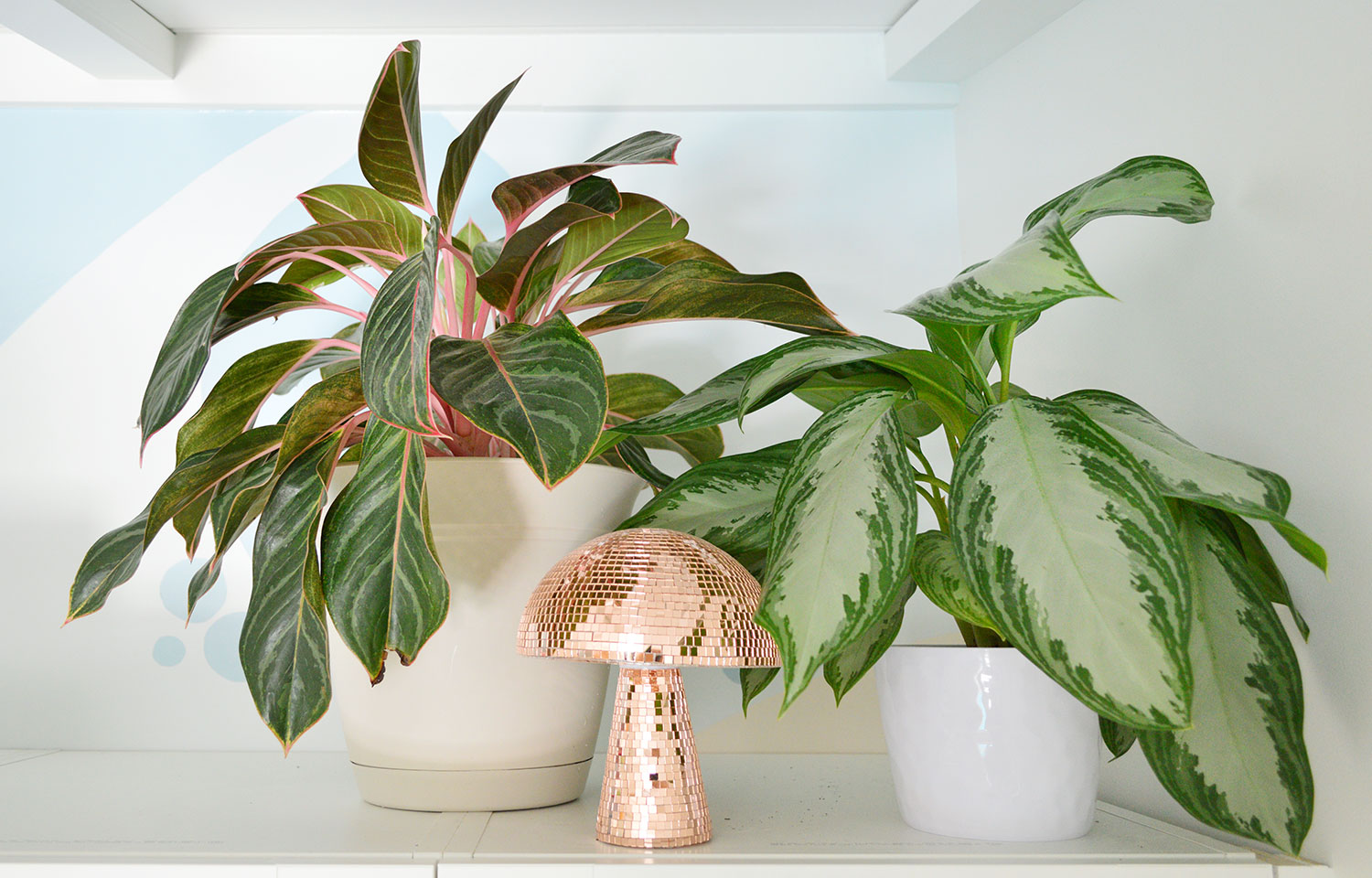
Aglaonema, also called the Chinese Evergreen Plant, is an easy-care houseplant that lives happily in many lighting conditions – even a dark corner of our daughter’s room. There are dozens of different Aglaonema varieties, most with large tropical foliage and colors ranging from silvery-green, red, and even vibrant pink. They’re also tough to kill, so they’re a great option for forgetful plant owners or anyone looking for an easy win in the plant department. These truly have been very low maintenance for us.
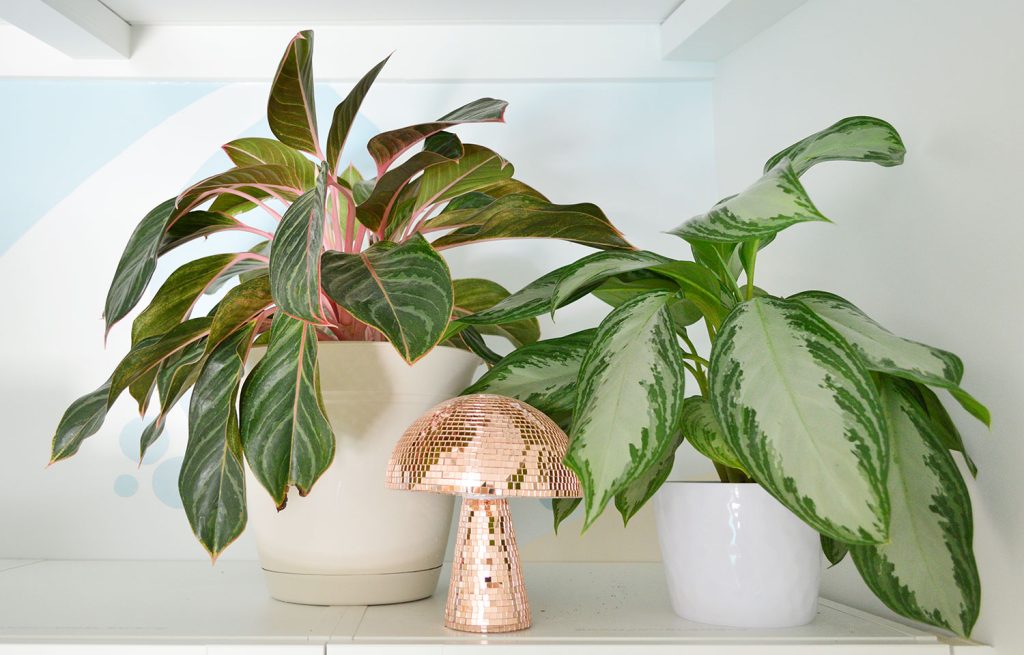
We purchased our two Aglaonemas (pronounced ag-lee-oh-neem-ah) to put atop our daughter’s closet. It’s sometimes hard to distinguish different varieties, but we believe that’s an Aglaonema Silver (right) and either a Candy Cane or Princess Silver Queen (left).
Aglaonema Quick Facts
Here’s what you need to know about your Aglaonema at a glance:
- Latin name: Aglaonema is the genus under which there are 21 recognized species.
- Common names: Aglaonema, Chinese Evergreen Plant
- Popular cultivars: Emerald Bay, Silver Queen, Maria, Pink Valentine
- Native to: Southeast Asia, including China
- Light: Prefers medium to bright, indirect sunlight but is low-light tolerant
- Watering: About every 2 weeks or whenever soil is dry
- Soil: Well-drained soil such as a cactus, palm, or succulent mix
- Ideal Humidity: Average household humidity
- Ideal Temperature: 70ºF – 90ºF degrees
- Cold Hardiness: USDA Zones 9-11
What is an Aglaonema?
Aglaonema is the general name for 20+ species of evergreen perennials originating in the tropical forests of Southeast Asia, hence their common name Chinese Evergreen Plant. They have become popular houseplants because they’re easy to care for and thrive in a generous range of indoor conditions. There are said to be hundreds of varieties, or cultivars, that have been bred to showcase different leaf shapes, variegation patterns, and eye-catching colors.
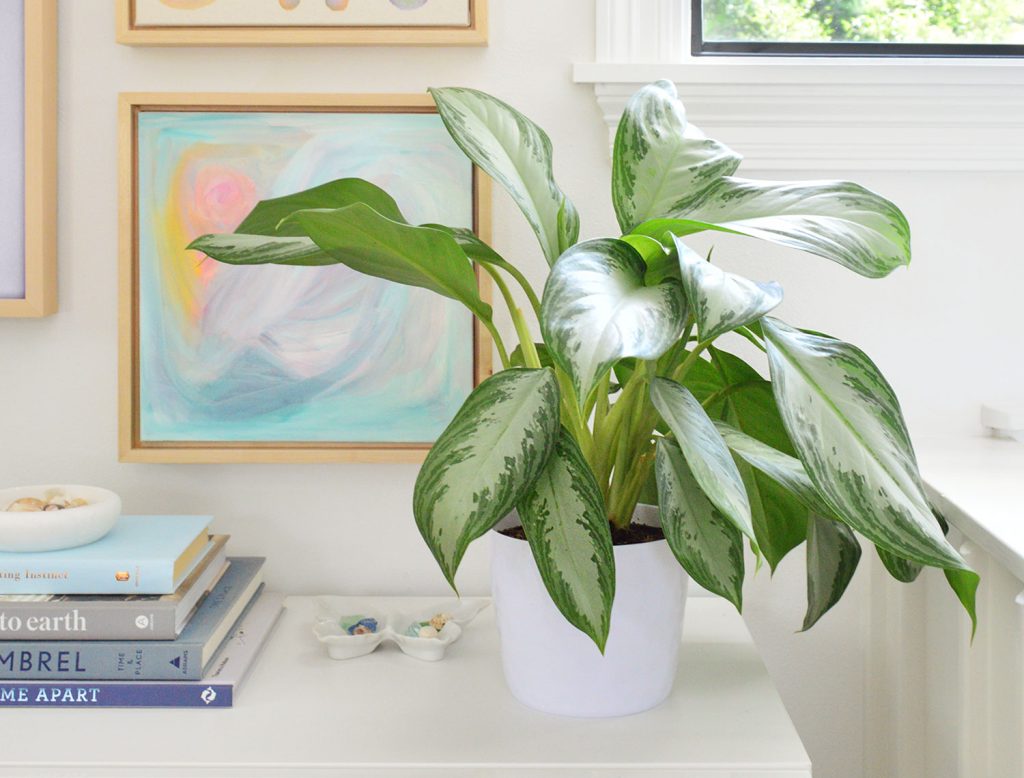
Aglaonema are also considered excellent air purifiers! They were cited in a famous NASA study about houseplants’ ability to remove harmful chemicals like formaldehyde and carbon monoxide from the air. So they’re not just good-looking, they’re good for you too.
How to Care for an Aglaonema
There’s a wide range of Aglaonema varieties and luckily most have the same care needs. Here’s what you need to know to keep this happy plant its happiest.
Light
Aglaonema plants prefer medium-to-bright, indirect sunlight, but can also tolerate low light situations. The more light, the faster it will grow and the more color & variegations you may see. The darker or greener the leaves of your variety are, the better it will survive in low light. Pink, cream, or light green cultivars may need sunnier spots. Just avoid too much direct sunlight, as that can burn the leaves.
Watering
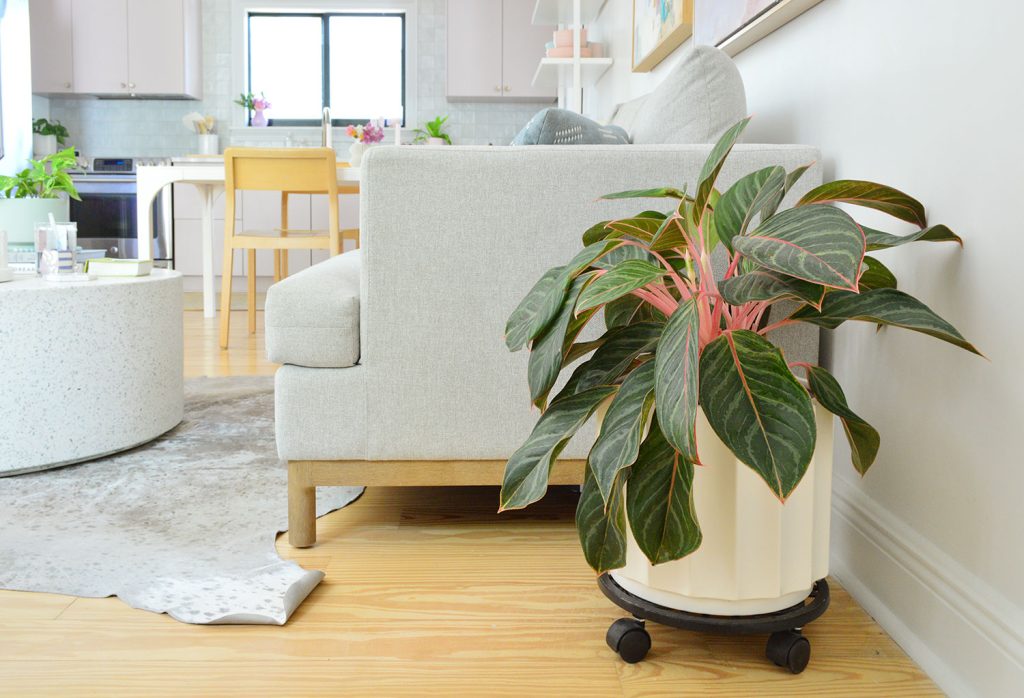
Aglaonema plants prefer moist soil and consistent watering, so it’s best to not let their soil dry out completely. We water ours in the growing season (spring & summer) about every other week, and less during the winter. Just be sure they’re in a well-draining pot because too much water can cause root rot. Aglaonema can tolerate short periods of drought, so don’t panic if you miss a watering. As with most houseplants, underwatering is preferable to overwatering.
Soil
Aglaonema plants need well-draining soil mix and a pot with good drainage holes because they hate sitting in water. A standard potting mix should work, but consider adding perlite, peat moss, orchid bark, or sand to boost its drainage. Some people also add a layer of lava rock to the bottom of the pot to keep the plant’s roots away from any excess water.
Temperature and Humidity
Average home interior humidity and temperatures are great for aglonema plants, so don’t overthink this part too much. They prefer temperatures between 60º-85º and, because they are tropical plants, they thrive in high-humidity environments. So some people will add a pebble tray under their aglaonema, especially in the winter months, to increase humidity around their plant. A humidifier also works. In the summer, keep them away from air vents, since they dislike cold drafts.
Fertilizer
Fertilizing your aglaonema during the spring & summer months helps replenish nutrients in the soil during its growing season. Consider adding a balanced fertilizer once a month, usually diluted to half-strength. These houseplant tablets are easy to drop into your watering can.
How to Propagate Aglaonema
Like most houseplants, healthy aglaonema can be propagated to create new plants. While they can be propagated in water like pothos, the most common method for aglaonema is soil propagation.
Step 1: Cut a healthy stem at the soil line
Use a clean, sterile clipper or knife to cut a stem close to the soil line. Try to choose one with 2-3 leaves if possible. Cut at an angle to expose more surface for growing.
Step 2: Plant in well-draining soil
Prepare a small pot with well-draining soil and stick your cutting in 1-2″ deep. You may need to remove lower leaves to expose enough of the stem to plant securely in the soil. You can also dip the end in a rooting powder to encourage faster results.
Step 3: Keep soil moist
Place your planted cutting into a spot with medium-to-bright indirect light and water or mist regularly to keep the soil moist. Your cutting should develop roots within several weeks. Aglaonema are slower than other houseplants to produce new roots, so be patient. It can be moved to a slightly larger pot as needed.
Common Problems
We haven’t had any issues with our two aglaonema plants at all (they really are very easy!), but they can be susceptible to these common houseplant issues:
- Yellowing leaves: Your aglaonema is overwatered. Let the soil fully dry out and put more space between your regular waterings. If that does not resolve your issue, you may need to repot with fresh soil and remove rotted roots. Make sure your pot has good drainage holes too.
- Burned or spotted leaves: Your plant is receiving too much direct sunlight. Find a new spot where it will get more indirect light.
- Brown leaves or tips: This could be caused by too much direct sunlight or by chemicals in your tap water like fluoride and chlorine. Try using filtered or distilled water, or even collected rainwater to alleviate the issue. If this doesn’t help, check for pets or root rot.
- Pests: Aglaonema plants may attract common pests like aphids, gnats, mealybugs, spider mites, and more. Look for signs of pests like damaged spots, wilting leaves, or webs. Most pests can be removed by hand and then you can treat the plant with neem oil.
Other Aglaonema FAQs
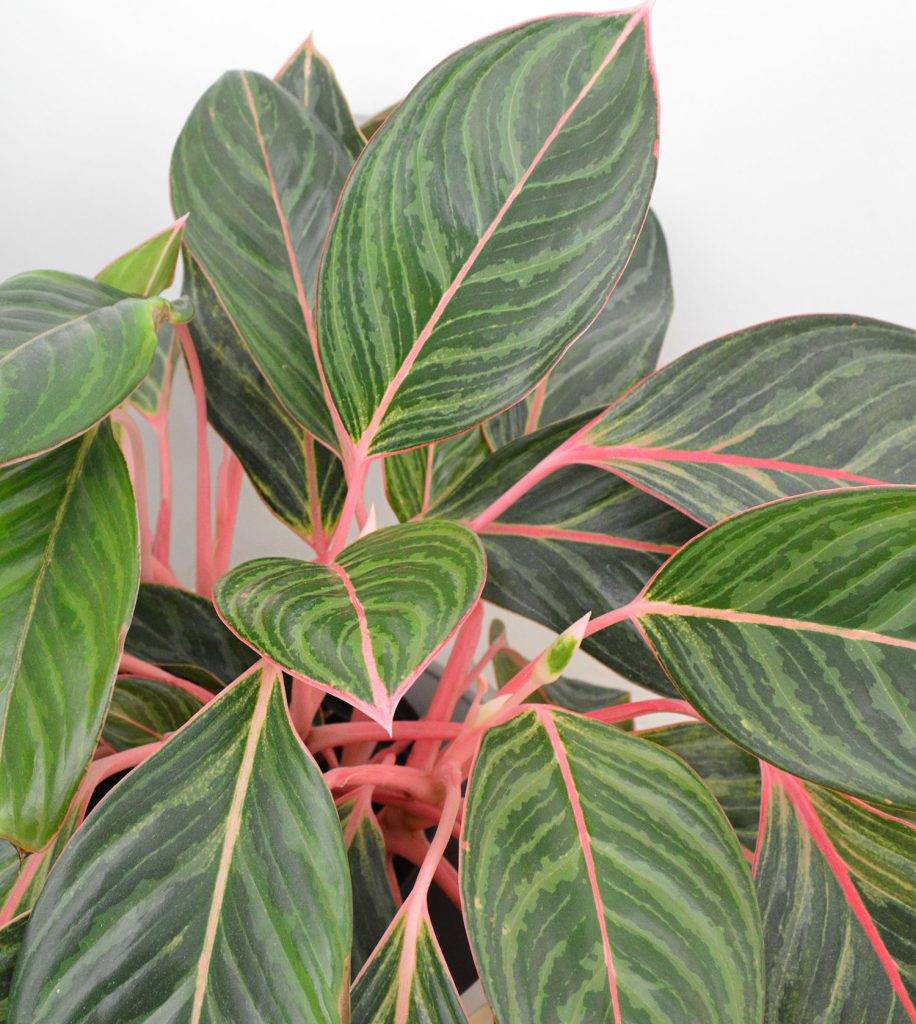
Are aglaonema toxic to cats and dogs?
Aglaonema plants can cause gastrointestinal issues and soft tissue irritation when ingested by pets and humans. They contain a sharp, undigestible mineral called calcium oxalate that bothers mouths, gums, throats, and more. Effects are typically mild, but it’s best to keep these plants out of reach of any curious pets or children who may nibble on them. Consult a veterinarian if you think your cat or dog has chewed or swallowed any part of the plant.
What types of aglaonema are there?
There are 21 recognized species of aglaonema, within which there are 100s of varieties. Some of the most common aglaonema cultivars are the Silver Bay, Silver Queen, White Rajah, Frasher, Maria, and Pink Valentine.
Why is it called a Chinese Evergreen Plant?
Aglaonema originated in Southeastern Asia, including areas of China, hence their common name Chinese Evergreen Plant. They are also perennial plants that do not lose their leaves.
More Plant Guides
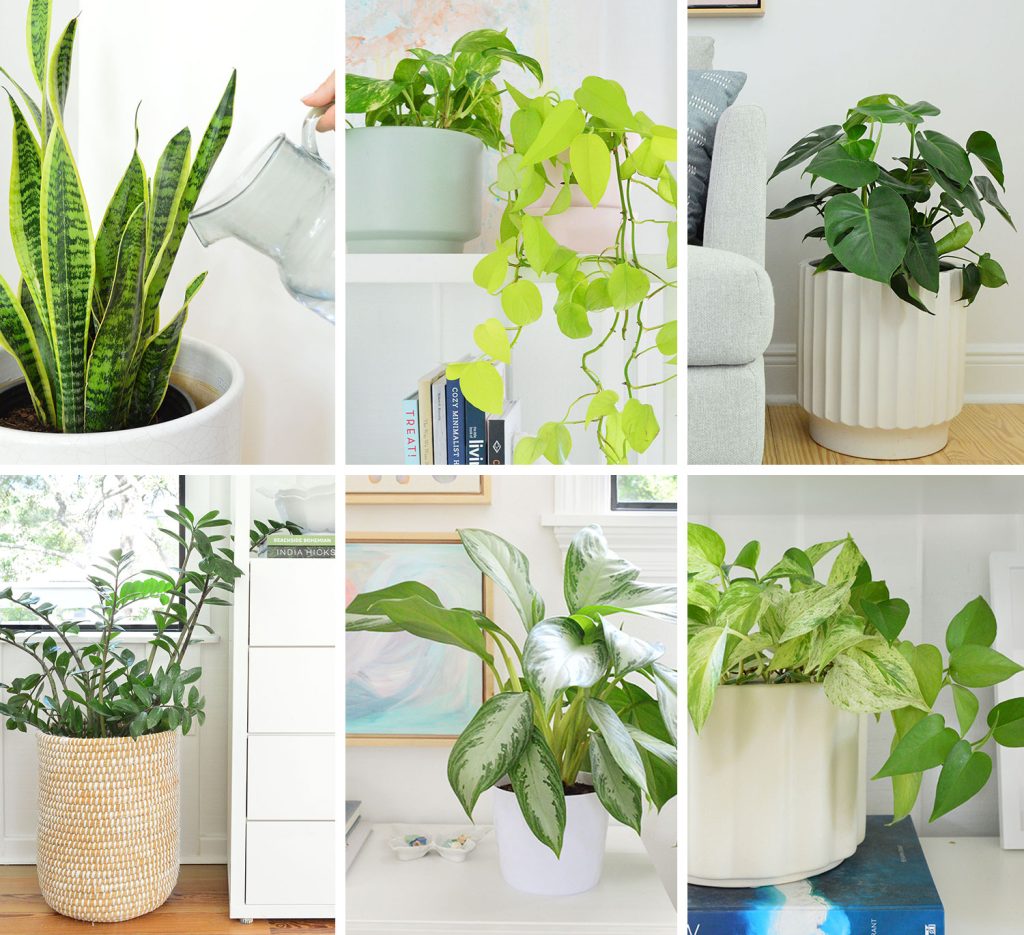
If you’re looking for more information on some of our favorite plants (real and faux!) check out some of these posts below:
*This post contains affiliate links, so we may earn a small commission when you make a purchase through links on our site at no additional cost to you.