

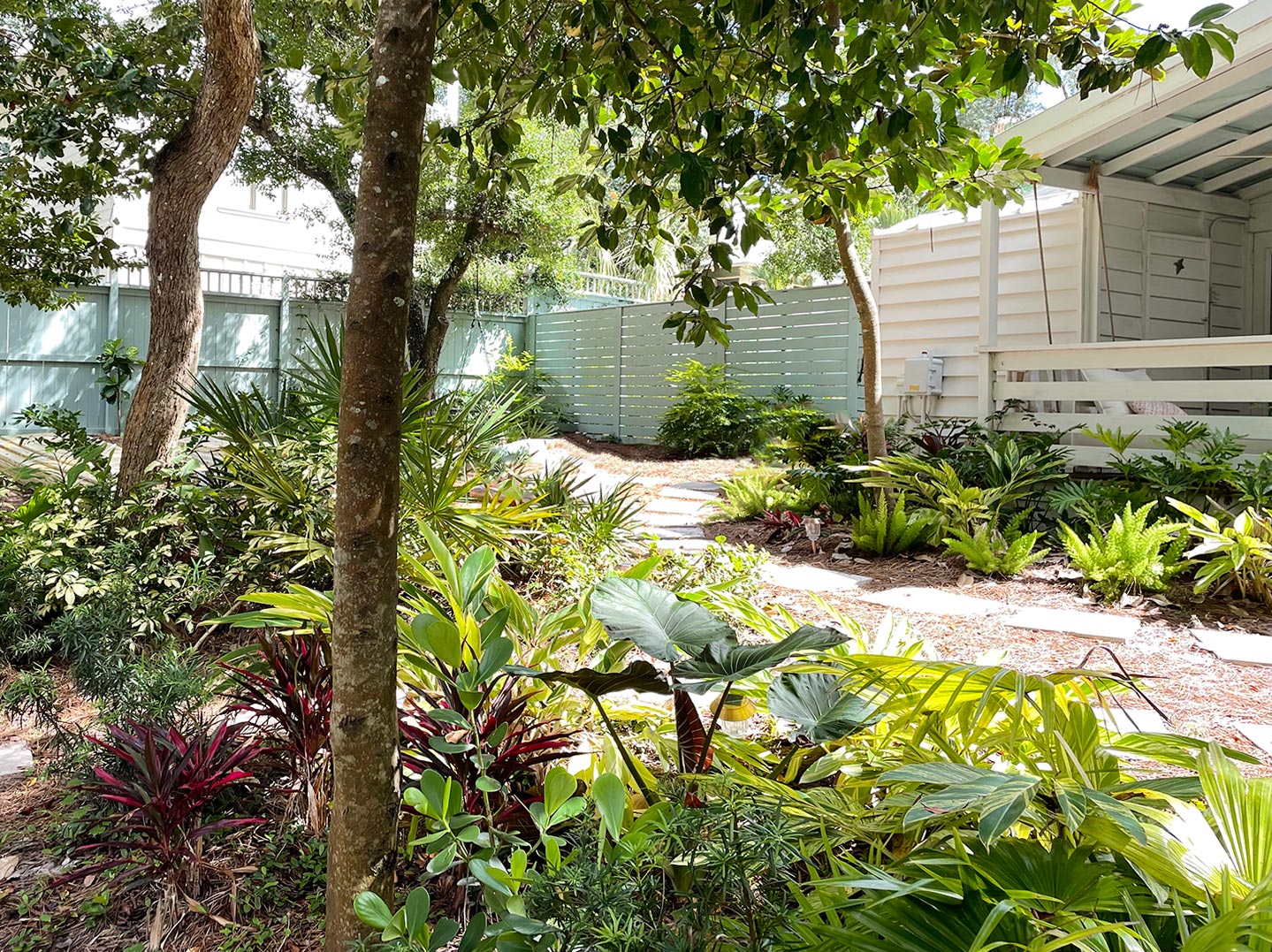
Last month’s arctic blast brought surprisingly frigid temperatures to Florida. We had three consecutive nights with temperatures in the low 20s – and an ultimate low of around 18 degrees! A lot of our outdoor plants aren’t built for that kind of freezing weather (in the 3 winters we’ve spent here we can remember one other low of about 32-degrees, but things went right back up to our more normal lows of around 45 degrees within a few hours). They’re calling our recent deep freeze a “once-in-a-century event” here in Florida. In other words: the ultimate test. So here are the steps we took to protect our plants, including a few things that worked better than others.
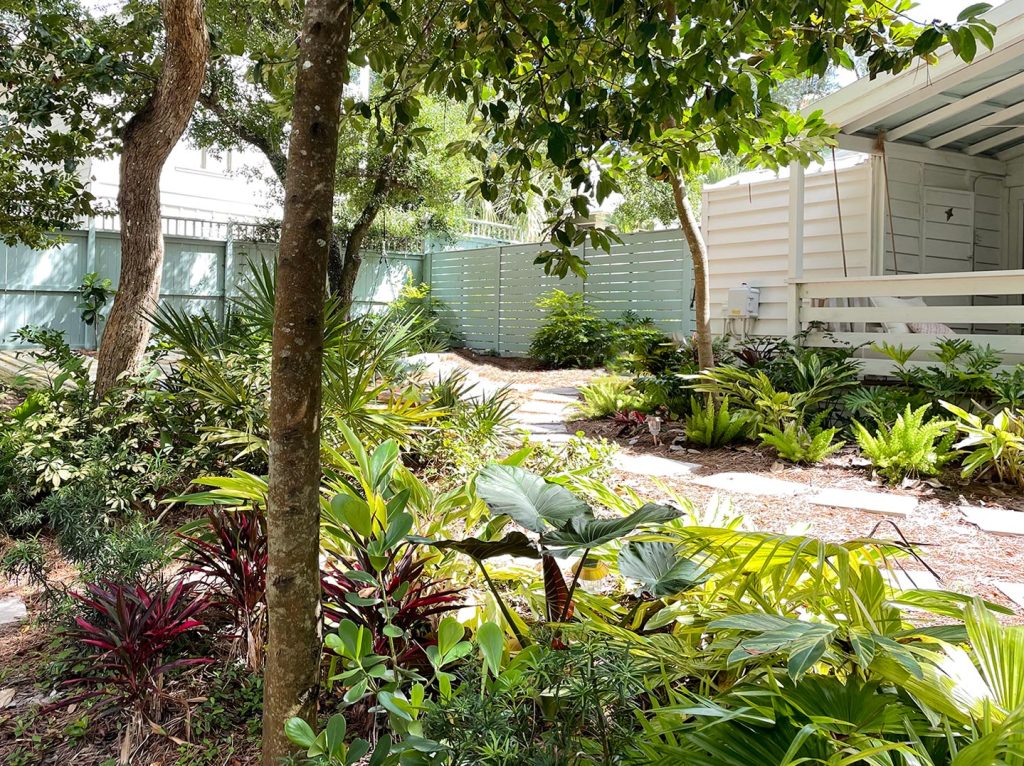
It should be said that there are definitely bigger things to worry about during extreme cold weather events – like protecting people, pets, and pipes. But you’ll often see plants as the 4th “P” on that list of things to check on in freezing weather. And since we’ve spent a good amount of time and money on our landscaping, we figured it was worth the effort to protect what we could, especially if some up-front effort could save us the time and money of replanting things that would otherwise die without a little help.
Tip 1: Identify Plants Vulnerable To Freezing
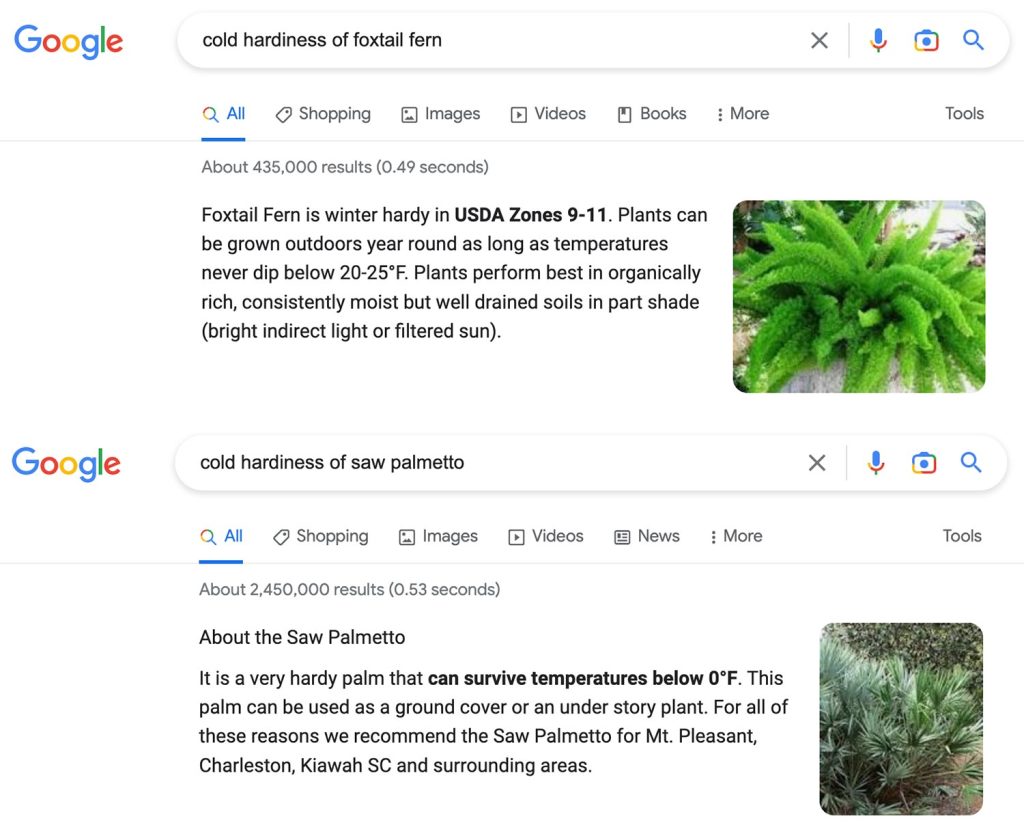
To prioritize your efforts, try to learn which plants are the least capable of surviving in your forecasted temperatures. Presumably, most of them are designed to survive in your growing zone (find your zone here). However, that might not be enough information if the weather is expected to be abnormally cold – especially for 3-4 days in a row. Going into this “hard freeze” we googled “cold tolerance” or “cold hardiness” along with the name of each plant we had outside.* It’s a great starting point for learning which plants we should focus on, and which would hopefully be just fine. For example, we learned that our saw palmettos wouldn’t need our help, but our foxtail ferns might.
*NOTE: If you don’t know the name of your plant, your iPhone camera can help (for free!) or try an app like PictureThis.
Tip 2: Bring Plants Inside, If Possible
The surest way to keep your plants from getting too cold is to bring them inside where it’s warm. Of course, this is easier said than done. Many plants might be dug in the ground, too heavy to move, and/or too big to fit indoors. But things like small-to-medium pots or hanging planters are good candidates for transporting inside. You’ll have to be the judge of what’s reasonable for your home.
As you’ll see in these pictures, we have A LOT of potted plants outside. Some might call us crazy for bringing so many inside – especially considering we’ve got a small home and this freeze was happening while we were celebrating Christmas. But we laid out some tarps by a couple of lesser-used doorways and crammed as many pots as we could onto them. The tarps protected the floors from dirt and any residual water in the soil (remember that outdoor pots have drainage holes on the bottom). It was slightly inconvenient for a few days, but this turned out to be the only method that had a 100% success rate.

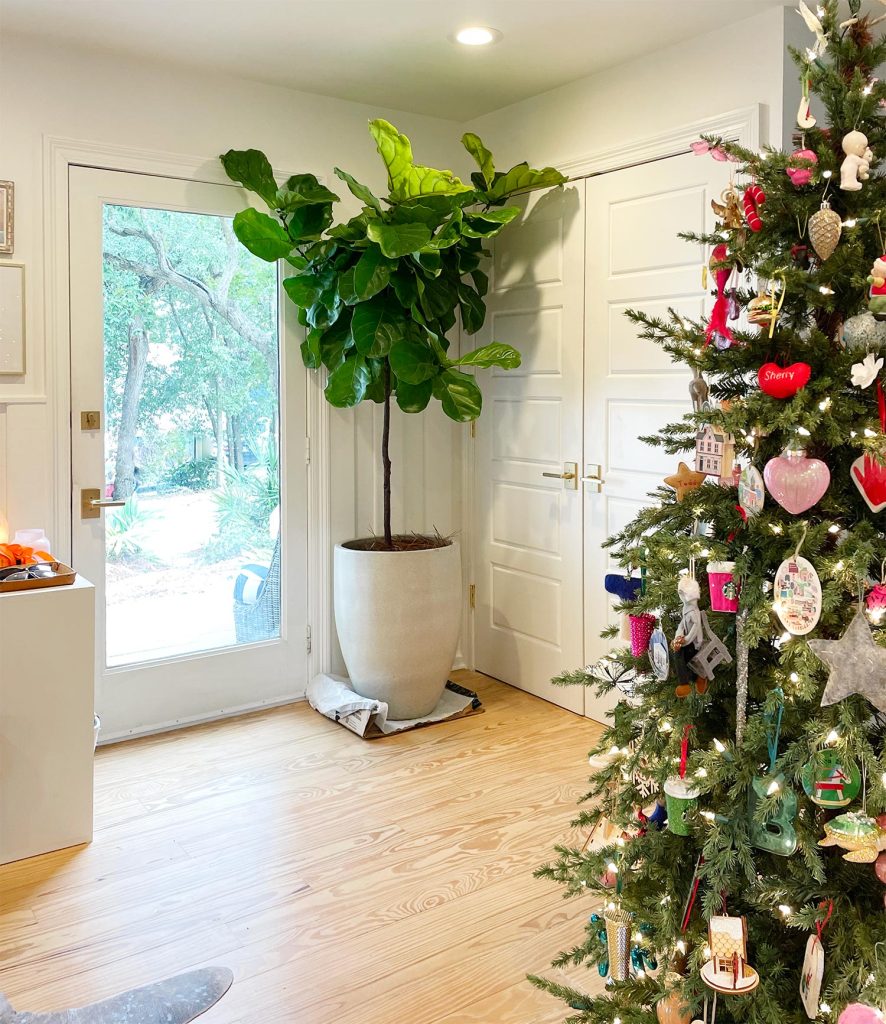
By bringing so many pots inside, we probably saved over $500 in plants that we might’ve had to replace otherwise. It was definitely worth it. Even if it did mean breaking out a dolly to drag our big fiddle leaf fig off the front porch and into the kitchen! It actually doesn’t look half bad in here… except for the fact that it made getting into the laundry closet kinda tight.
If bringing your plants indoors to your heated space isn’t possible, even relocating them into a protected area like a garage, basement, or attic could be enough to keep them alive. Potted plants are especially vulnerable to cold because their soil is less insulated than those dug into the ground. And getting them out of the wind helps to minimize heat loss.
Tip 3: Add Pine Straw Or Mulch
For plants staying outside, your main strategy is helping them stay as warm as possible. One technique is to add a layer of fresh mulch to your plant beds, especially around the bases of your plants. Mulch actually helps trap air around your plants – particularly when using a light material like straw or pine straw – which insulates them against dramatic drops in temperature. It can also help retain moisture and, surprisingly, wet soil actually retains more heat than dry soil.
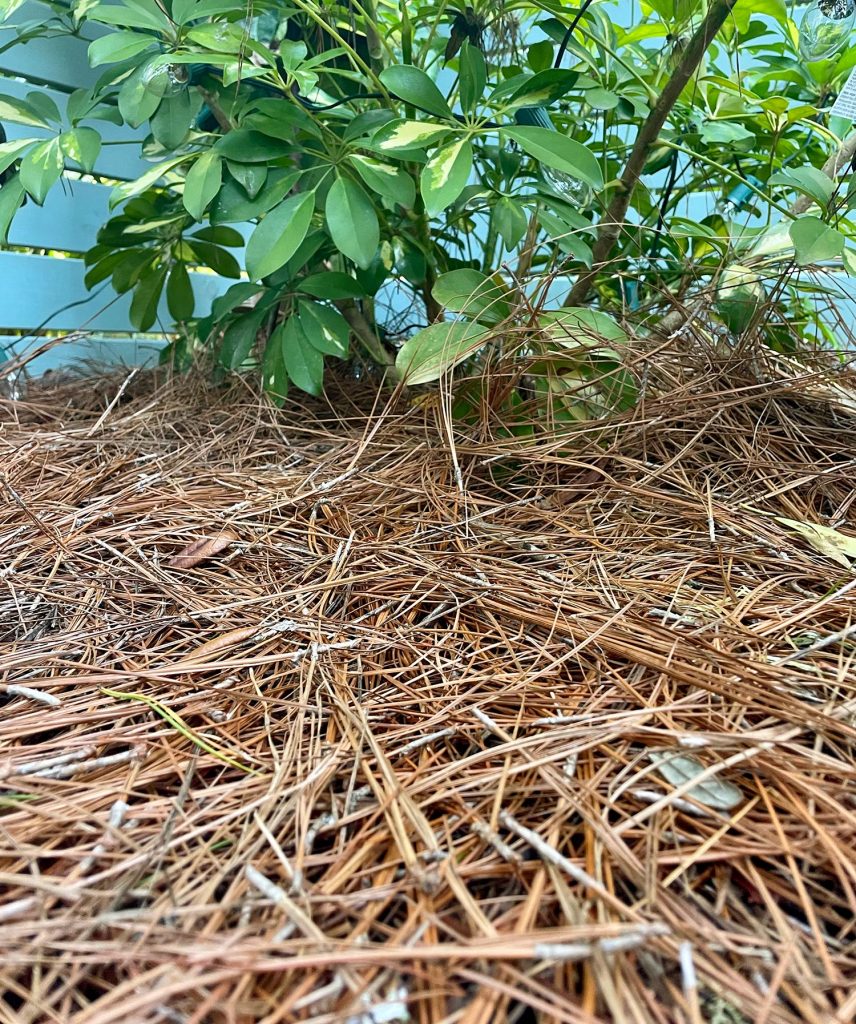
Mulching does require a bit of time, effort, money, and planning. Luckily, we already had plans to add fresh pine straw to our yard because we had guests visiting for the holidays. We wanted the clean look of freshly mulched beds and the cold protection was a nice bonus! It’s also a great tip to water all of your freshly mulched plants before the cold. As I said above, we were surprised to hear that as a tip from a lot of local garden centers – but wet soil retains more heat than dry soil. So sprinkle away.
Tip 4: Cover Plants With Breathable Fabric
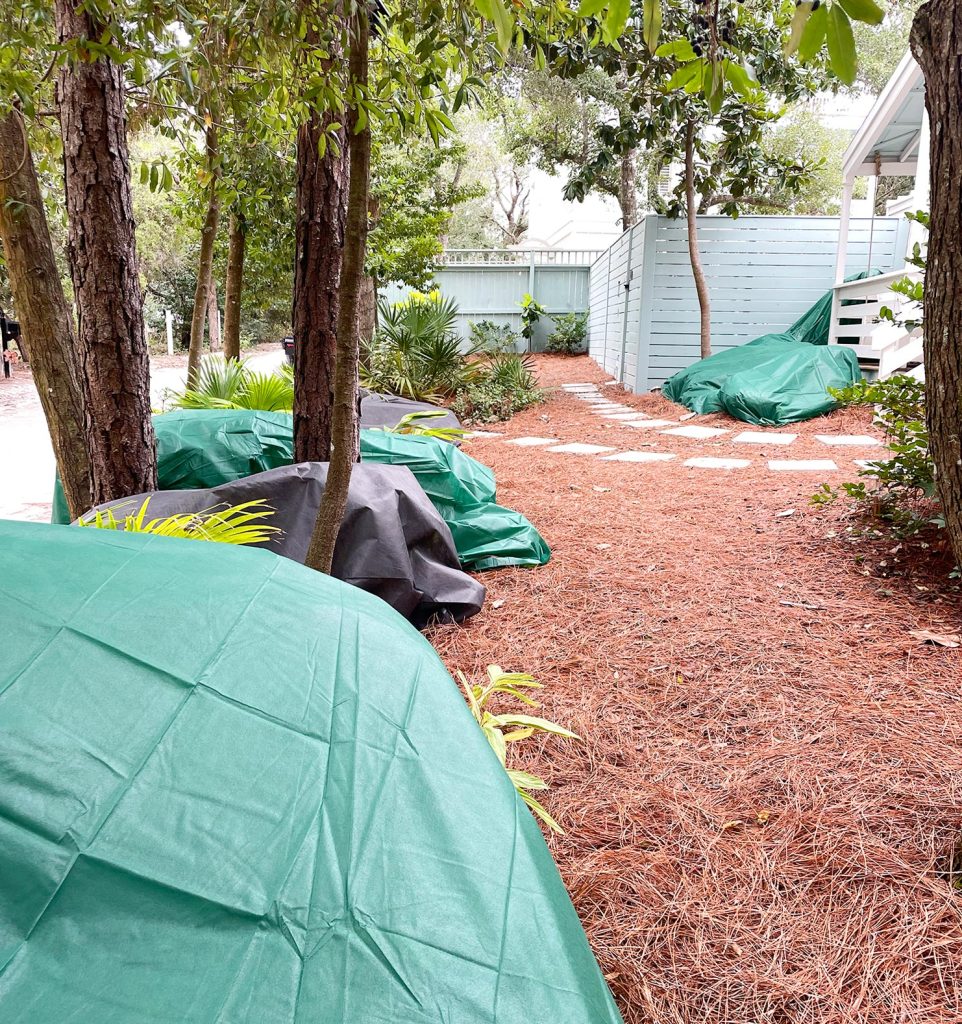
If you’ve ever seen someone throw a blanket, towel, or sheet over their plants, that’s another popular way to try to keep some heat around your plants. The cover traps warm air around the plant in the same way that a blanket keeps us humans warm – but instead of trapping body heat, it retains the heat that’s coming off the plant and soil. We figured it wouldn’t be foolproof with such low forecasted temps, but we knew even if it saved half of what we covered it would be worth it. And we picked up some tips to make it as successful as possible that we’ll share with you below.
Use breathable fabric, not plastic
It may sound counterintuitive but using breathable fabric so air can still flow around the plant was the number one tip from local nurseries and online plant experts alike. We read over and over again that a plastic drop cloth or plastic bag can be worse than no protection in many cases, since it can hold moisture against plant tissues and cause more serious freeze damage. Just think about how you’d feel covered in plastic vs fabric. Not fun, right? That’s why things like spare bedsheets or towels are good solutions that you may already have around.
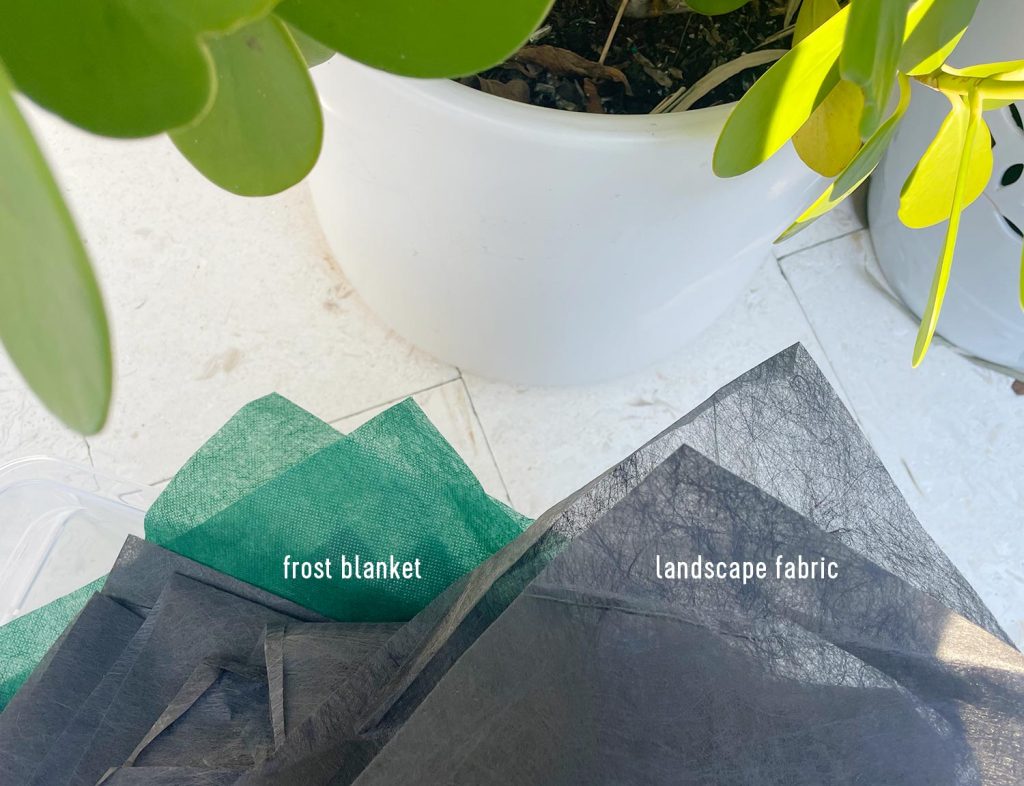
If you can’t find frost blankets, try landscape fabric instead
We don’t have many spare sheets, so we bought several of these Frost Blankets when we first saw the forecast. But a few days later, when we went back to grab a couple more, the store was completely sold out. Thankfully, someone there told us that landscape fabric – the kind meant to block weeds – is a similar material, making it a suitable substitute. We found it to be a little thinner than the Frost Blankets, but it was also less expensive. And in the end, they both seemed to perform about the same.
Don’t “lollipop” your plants
Make sure your blankets go all the way to the ground. Your soil is the main source of the heat that the blanket will be trapping, so just wrapping the leafy top (like a lollipop wrapper) isn’t as effective. When draping bushes or small trees, think more about making “ghosts” where your cover makes contact with the ground on all sides. Also, don’t forget to buy some garden stakes or landscape pins to keep your covers held down – especially if it’s going to be windy!
Tip 5: Add An Ambient Heat Source
To increase the amount of warm air your blanket will trap, you can also introduce another heat source. Someone tipped us off that wrapping incandescent Christmas lights around your plant or through your plant beds is a great way to do this. LEDs won’t work because they don’t give off heat, but the old-school ones – specifically the larger C9 bulbs – are slightly warm and known to work well. Just be careful not to overload your breakers with too many strands. Here’s what ours looked like before we covered them.
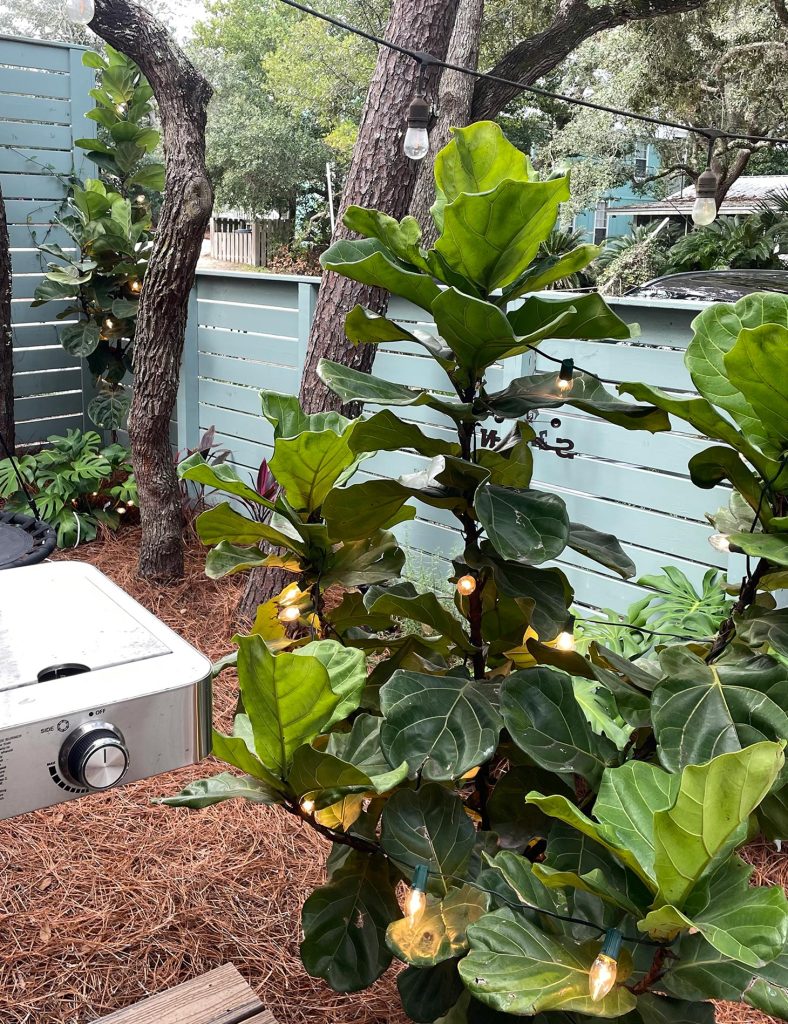
And here’s what they looked like after we put the frost blankets over them. I was kinda pretty, in a spooky sort of way!
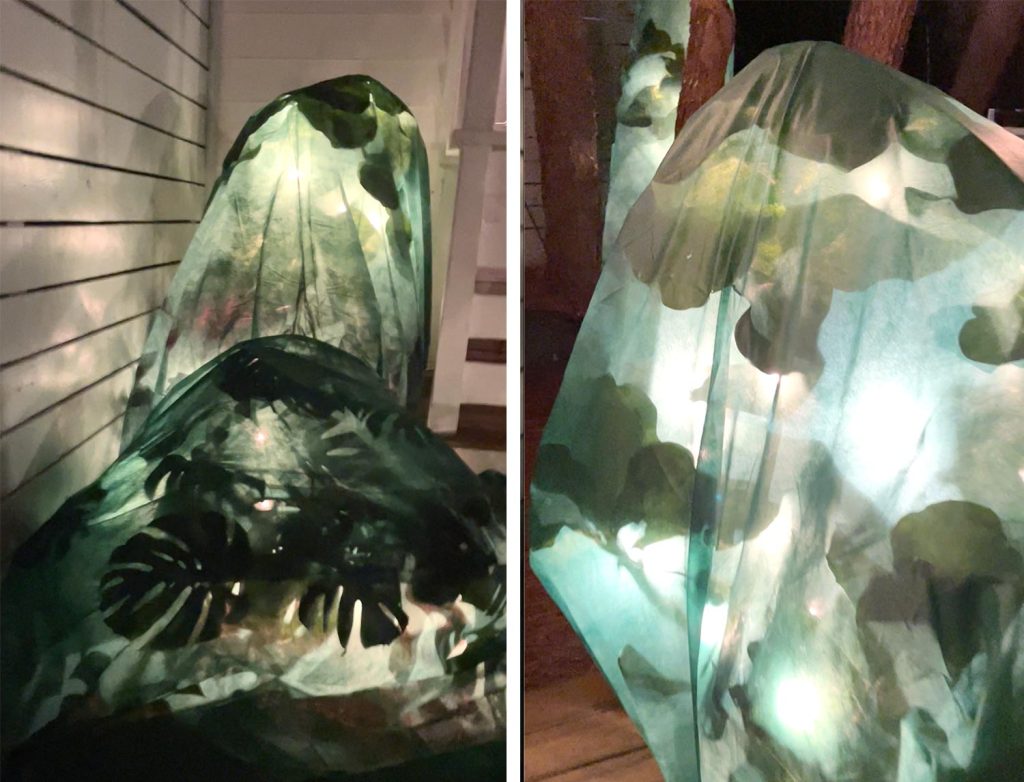
We’ve also heard of people filling milk jugs with hot water and placing them near their plants. The same principle is at work, but this sounded like a more labor-intensive technique. Plus, since this was happening on Christmas weekend for us, we had no trouble finding plenty of discounted C9 bulbs at the store. We got 4 boxes for the price of 1!
How Did Our Plants Fare?
After taking all of the above actions, I’d love to say that our landscaping looks as good as it did before the cold snap (see how it looked this fall here). It definitely does not. Despite our efforts, we, unfortunately, have a lot of plants – namely tropicals – that just aren’t built for the extreme sustained “hard freeze” that we experienced for 3 solid days in a row.
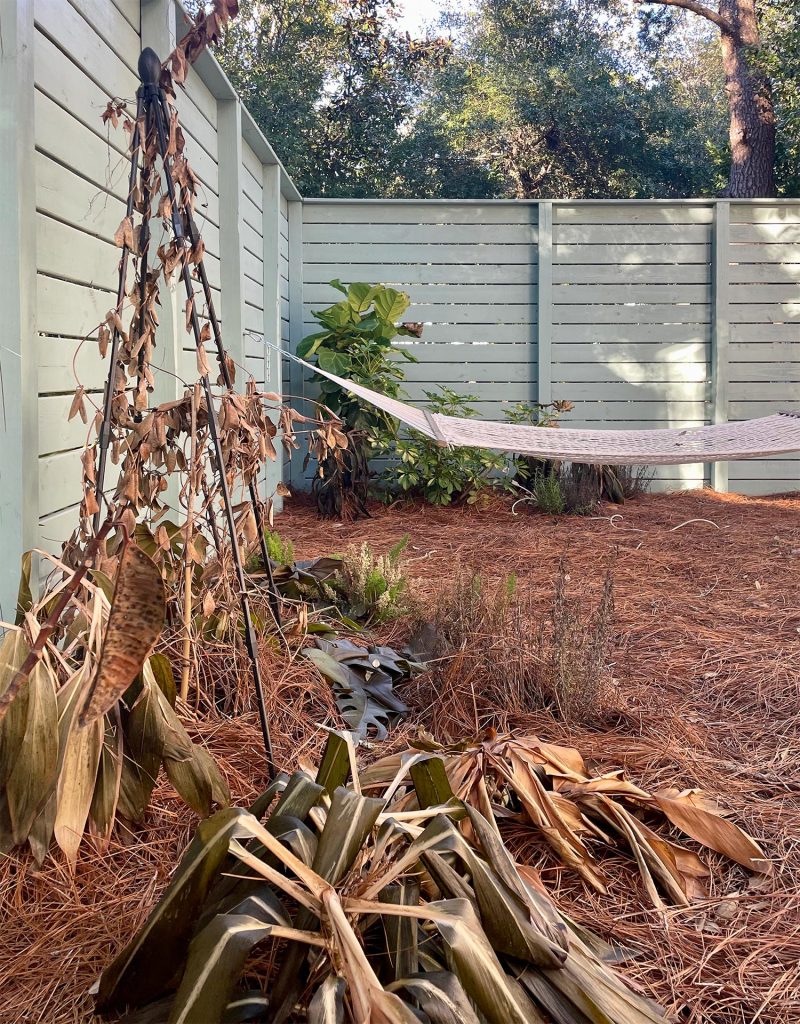
I wish there was a clear takeaway like “blankets work” or “C9 bulbs are amazing every time” but our results were too mixed to draw such decisive conclusions. Some covered plants did great (as in, they looked pristine when we uncovered them) and some didn’t. It’s likely that many if not all of our covered plants might come back based on the base/root seeming to be unaffected and only the leaves looking limp (typically leaves can come back if their root/stem is ok) but they don’t all look great right now. We’ll have to update you on how things fare, so stay tuned for that.
But our overview is that while some covered plants had lights and some didn’t, both groups had some plants that looked great upon uncovering them and some really wilted ones (which again might completely come back, but they don’t look great now). Once again: bringing plants inside was the only 100% success rate we had.
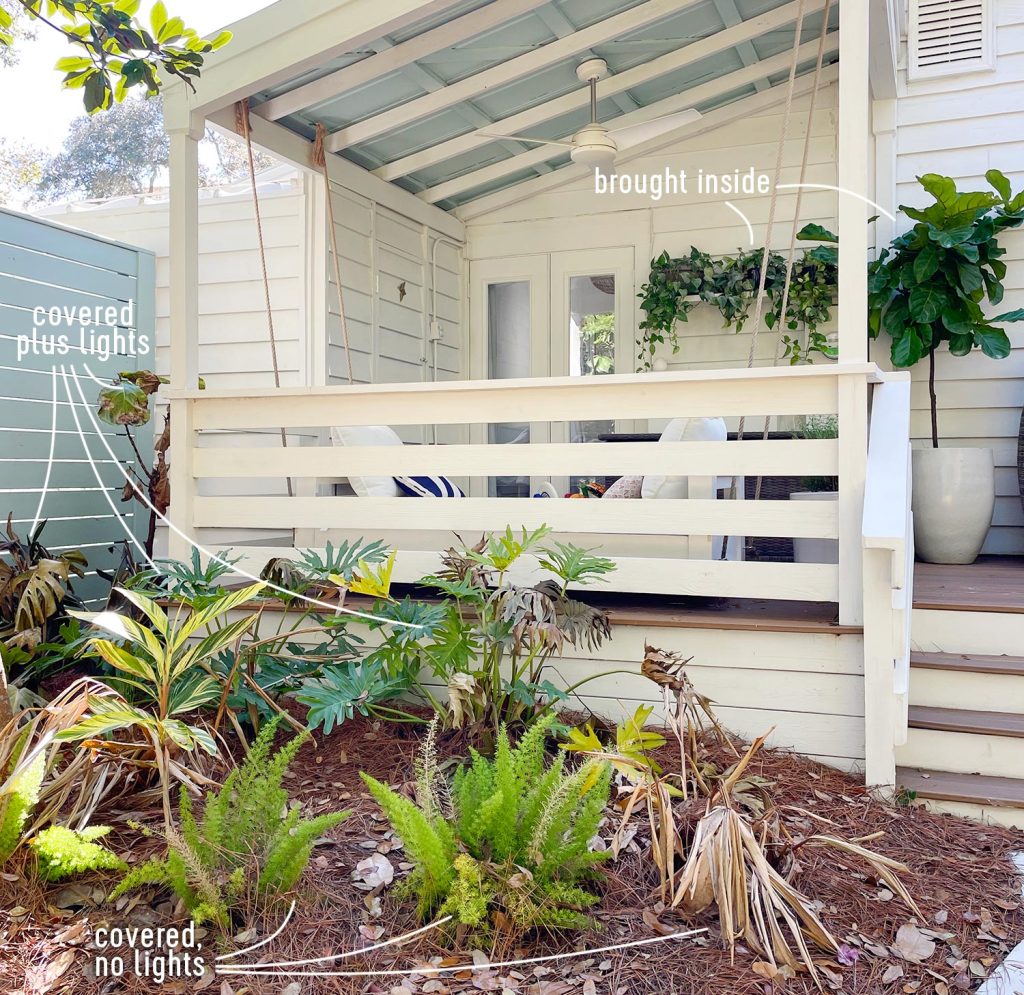
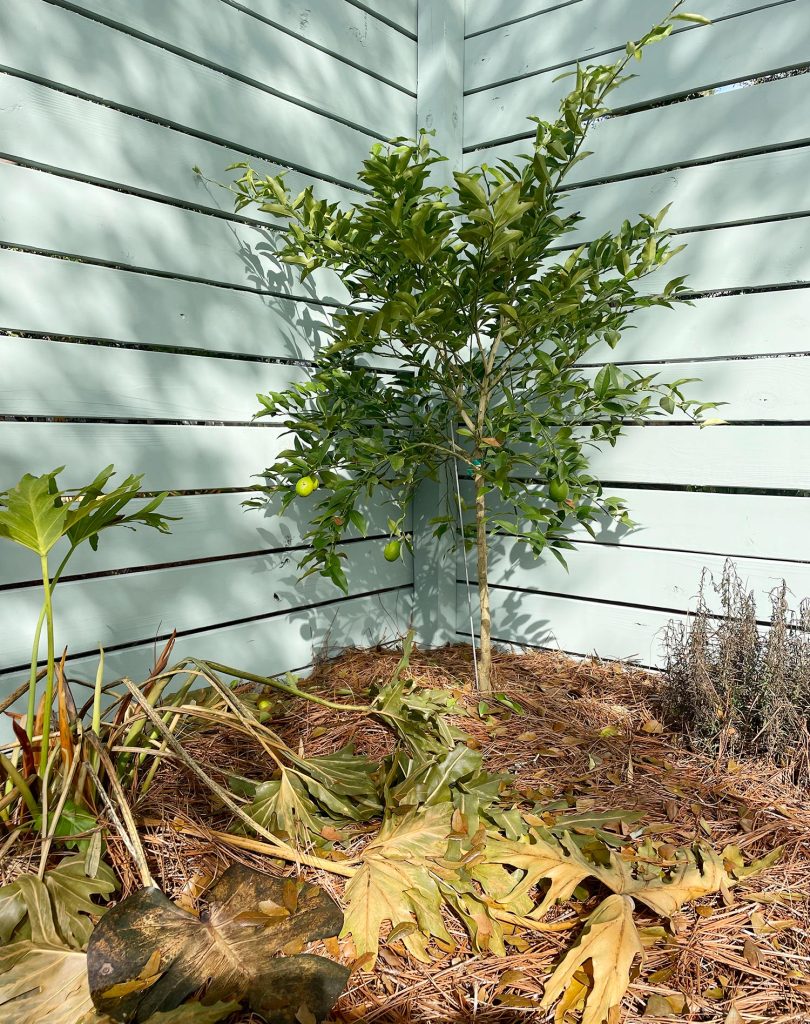
We think a lot of this “varied result” could be related to specific plant species and planting locations. For instance, one of our lime trees looks completely fine (see below) and the other is basically covered in brown leaves and all the fruit dropped off. Both were mulched and covered, but without C9 bulbs. Our best guess is that one was a lot more exposed to the wind than the other one since the happier one (seen below) was in a corner where there were two fence sides as wind breaks. Most of our more tropical plants like monsteras, elephant ears, and gingers got entirely limp, but our philodendrons fared okay with at least a few happy-looking leaves and a base that’s already shooting up new healthy leaves.
We have several fiddle leaf figs planted outside because we’ve had better luck with them outdoors here than inside. Over the past 3 winters they’ve been outside & very happy, so we brought in the potted one that we could, and for the ones that were planted in the ground, we covered, mulched, and wrapped them in Christmas lights. The results? One one came out completely unscathed (below right). And, to our surprise, it was the smallest and most recently planted of the whole bunch. In fact, that whole bed it was in did pretty well. So maybe it was just in a warmer corner of our yard which once again had two fences meeting to form a wind break around it?
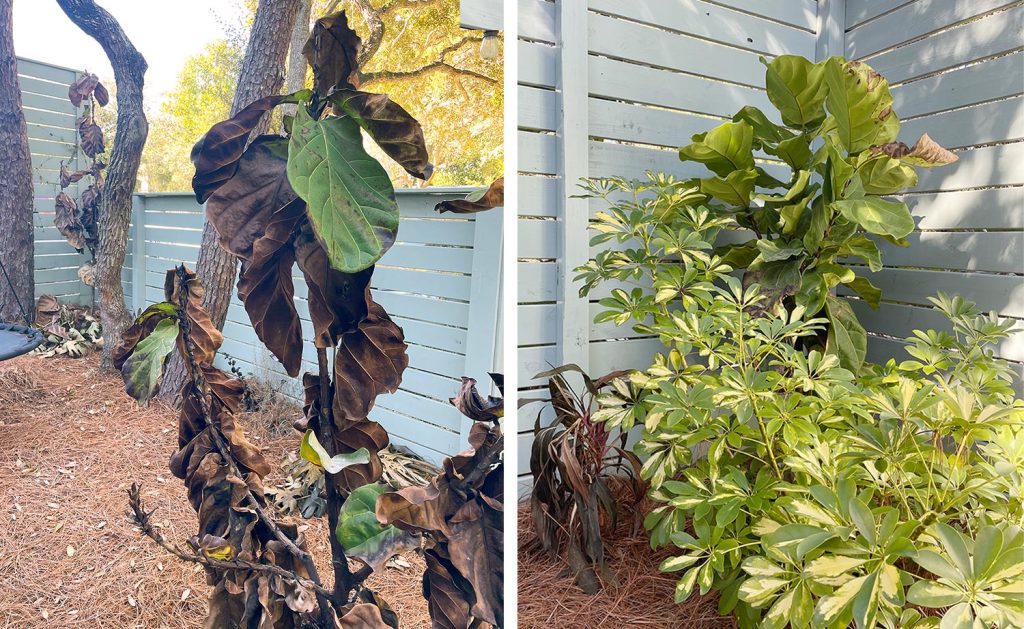
The only reason we feel ok about the other figs looking so bleak is that we have seen a fiddle leaf fig completely die inside of our house (dropped all leaves, was a dead-looking stick) and when we put it outside it completely regrew into a super huge and healthy tree. So we are holding out hope that happens again with these. Will keep you posted for sure.
So, again, it’s hard to draw clear conclusions about what of this effort worked… at least not yet… but it feels safe to say that it didn’t hurt to try and we have high hopes for many things coming back this spring. (*crosses all fingers and toes*)
What’s The Good News?
As I’ve mentioned when it comes to limp plants or brown leaves, all hope is not lost. There’s a huge difference between a dead leaf and a dead plant, so just because lots of our leaves are brown and wilted, doesn’t mean the whole plant’s a goner. They may just need time to shed their frozen bits and regrow new ones when the weather heats up again. In fact, some of our plants have already started to show signs of life (it has been about 3 weeks since the freeze).
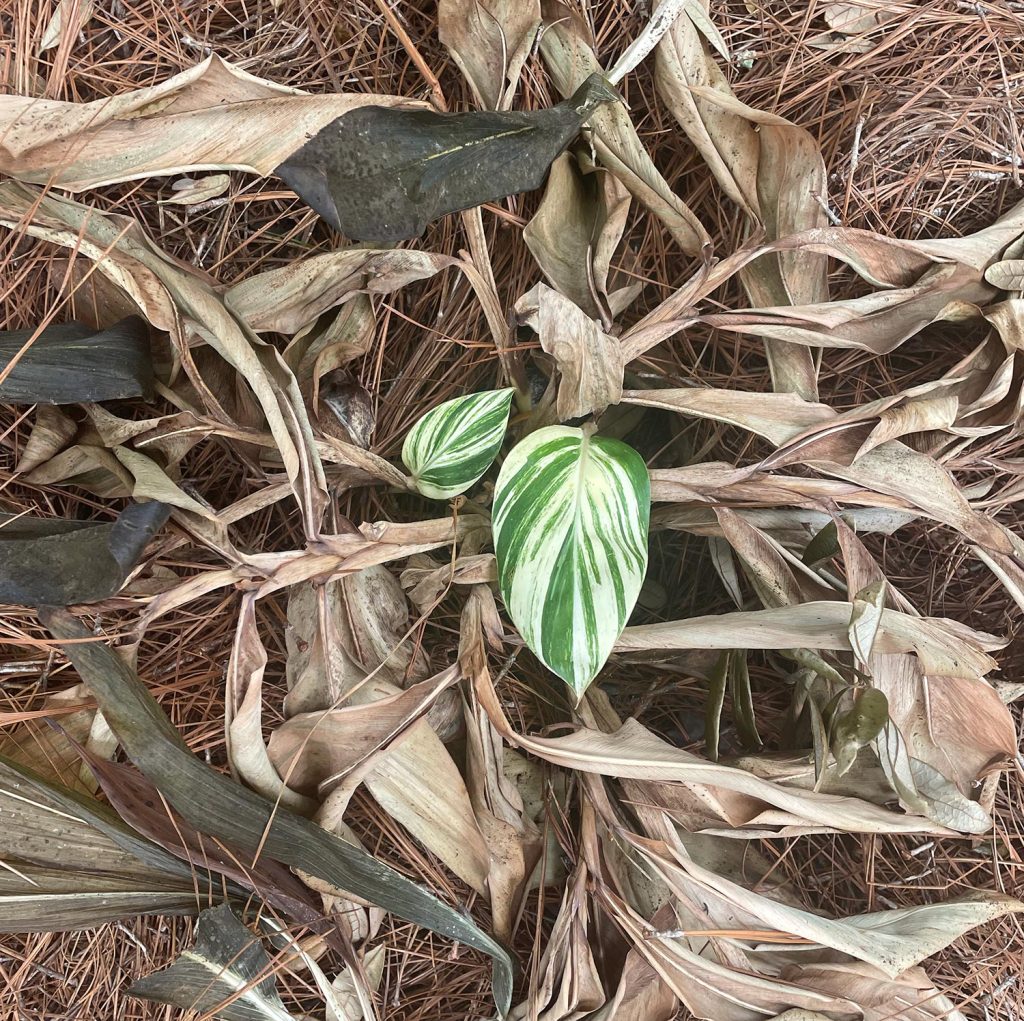
So not only should you not jump to conclusions about what survived and what didn’t, this leads us to our last tip…
Tip 6: Don’t Prune Right Away
As antsy as we are to clean up all of the dead-looking plants in our yard, many of the experts we googled (and chatted with locally) say that our plants will actually do better if we wait. Recommendations differ slightly from plant to plant, but in general, here are some reasons to put your shears away (for now):
You might cut off healthy branches or dig up healthy plants
You probably won’t know what parts of the plant are truly dead right away. Some damage may not appear immediately, while some rough-looking plants may bounce back in a few days. Still, others won’t sprout again until the spring. You wouldn’t judge the health of a tree based on its empty branches in the winter, right? So by waiting for things to start greening up again, you’ll have a much clearer idea of what plants (or parts of your plants) didn’t survive.
Dead leaves can still protect your plant
Until you’re past your area’s last possible frost (check your frost dates here) there’s always a chance you’ll experience another cold snap this season. That dead material can still offer some insulation to the living parts of the plant, whereas removing them leaves each plant more exposed to cold and wind than before.
You don’t want to stress your plant more
After a freeze event, your plant focuses its resources on keeping its core alive and healthy. That’s what you want it to do. Cutting branches or removing leaves too soon might trigger a growth response, which might unnecessarily “distract” its resources. Plus, if pruning does result in new growth, those new leaves become even more vulnerable to future freezes this season if another cold front rolls around.
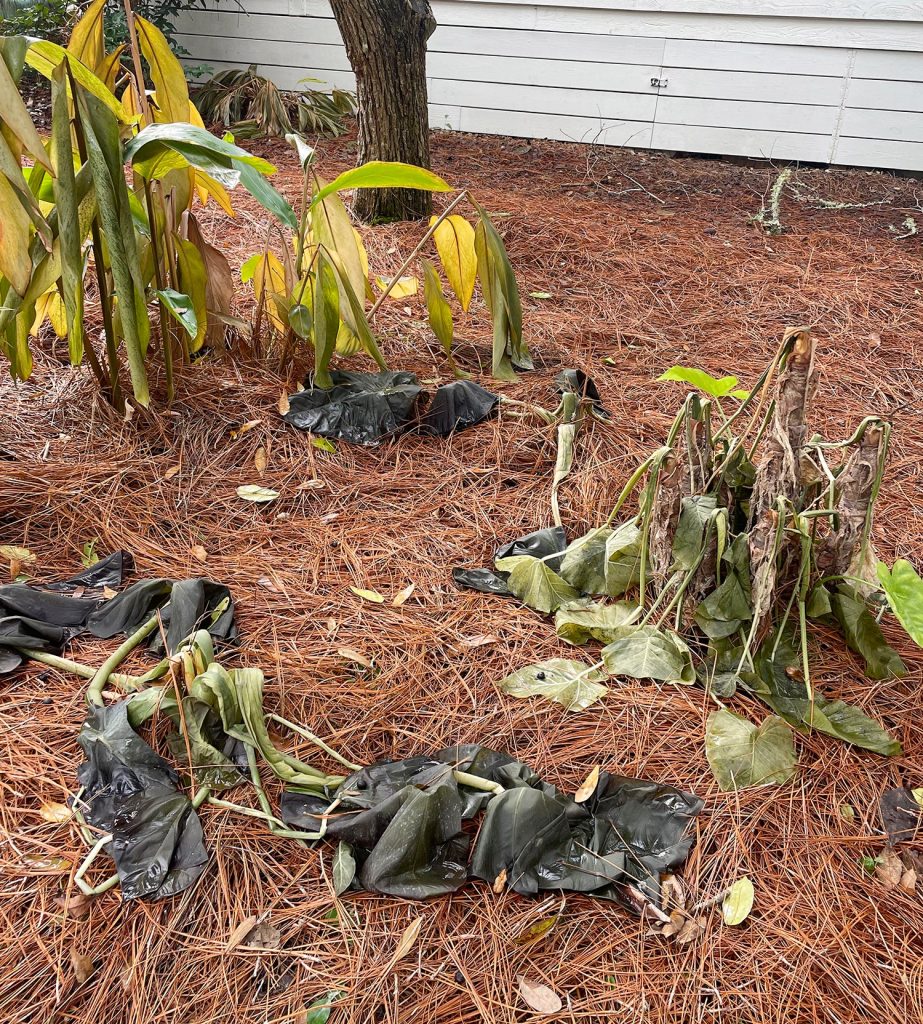
Generally, we’ve followed the rule of letting damaged leaves and flowers fall off on their own (even if it means waiting for new growth to push them off in the spring). But for anything that is mushy or gross, which tends to happen on some tropicals (see above), we remove that sooner to prevent rot. This happened to one of our biggest elephant ears last year during our one and only brief frost, but it grew back just as big this year. Fingers crossed it does that again!
So even though our yard doesn’t look quite the way we want it to right now, we’re reserving final judgment on what worked and what didn’t until spring and summer rolls around. We’re hopeful that more things survived than it seems and, if not, we’ll reevaluate if we want to risk replanting the same thing in its place. A neighbor of ours said she likes to look at these moments as an opportunity for things to come back hardier and stronger, so we’re hoping that holds true for our plants.
Additional Freezin Weather Preparation
Our plants weren’t the only thing we took steps to protect during this recent cold snap. Since it was our first time having such low temperatures in our Florida house, we protected our pipes from freezing too. Several of our neighbors experienced burst pipes – especially in their outdoor showers. But luckily the steps we took spared us from having the same trouble!
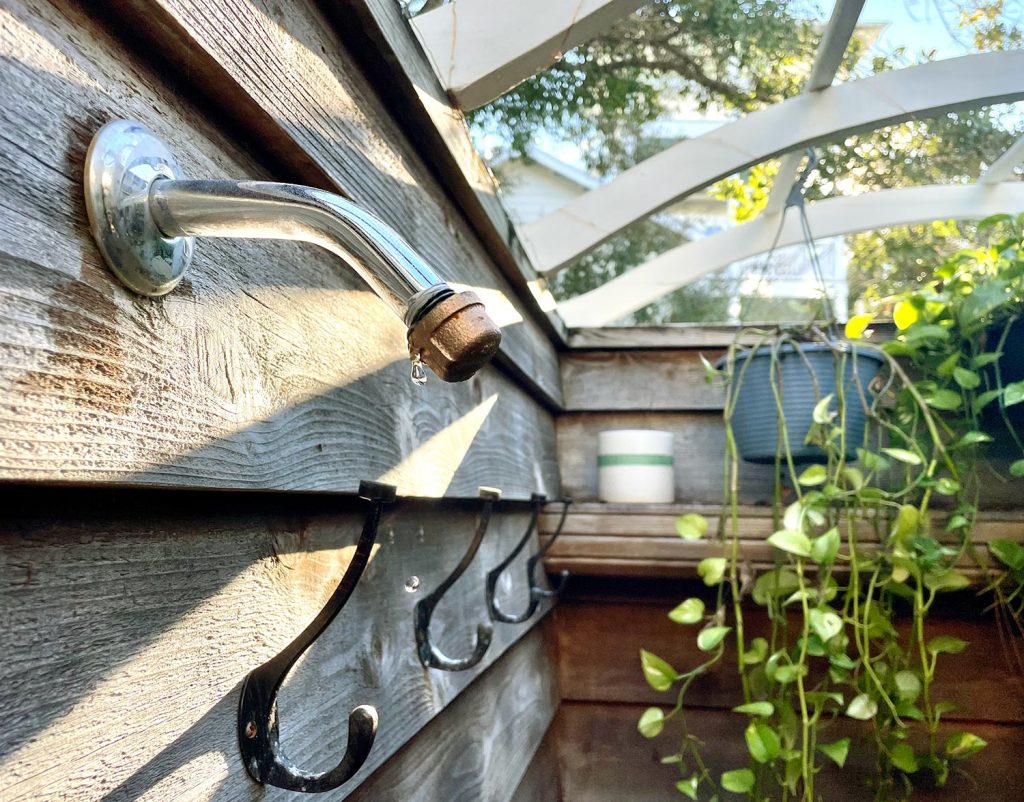
Our heat also stayed on this time, which was a big help, but we’ve also written about how to prevent frozen pipes when your heat goes out.
*This post contains affiliate links, so we may earn a small commission when you make a purchase through links on our site at no additional cost to you.