

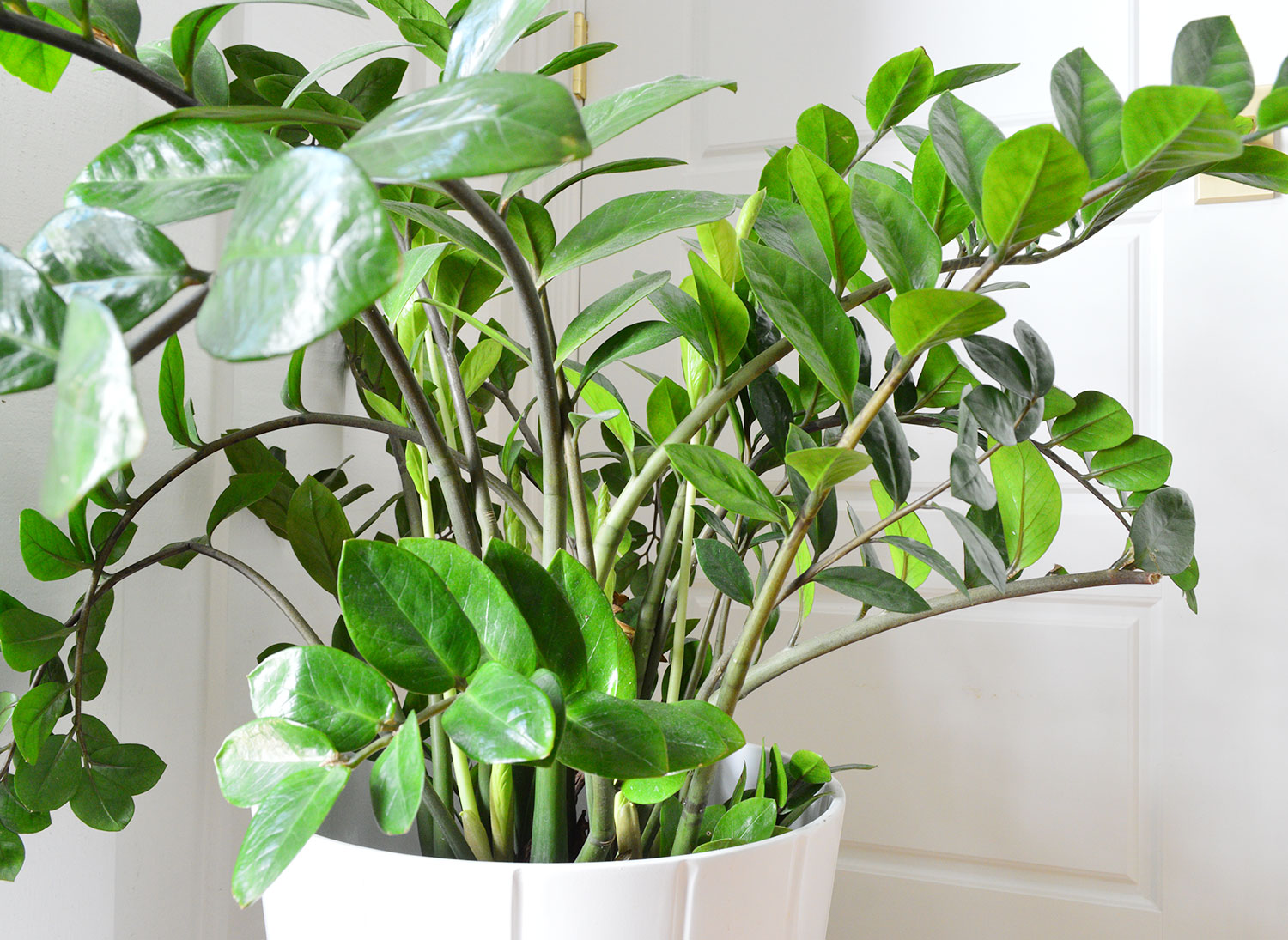
The ZZ plant is another one of our favorite low-maintenance houseplants. They’re easy to care for, hard to kill, and always look full & leafy. They’ve even earned the nickname “Eternity Plant” because they’re practically indestructible! That’s why they’re a top choice for commercial spaces, doctor’s offices, and busy homes like ours. Don’t you love a house plant you can forget about?
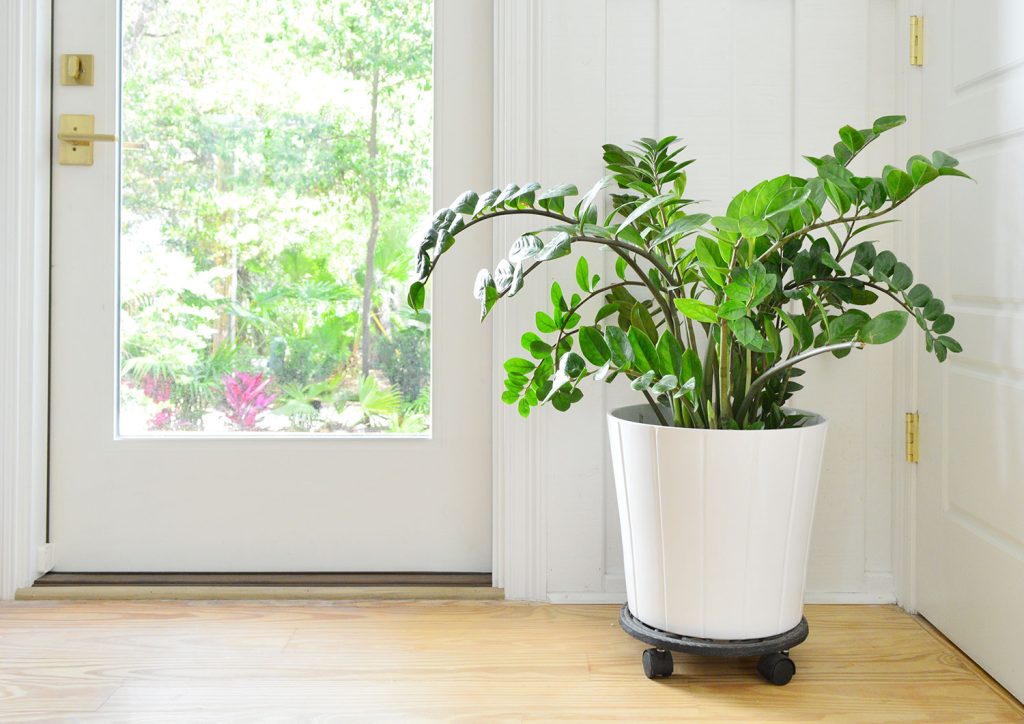
ZZ plants are sold in a variety of sizes, meaning they’re great for shelves, tabletops, and small surfaces as well as larger statements on the floor. We have some that are over 3 feet tall with their pots!
ZZ Plant Quick Facts
Here’s what you need to know about your ZZ plant at a glance:
- Latin name: Zamioculcas zamiifolia
- Plant family: Araceae or Arums, which includes Philodendron, Alocasia, Aglaonema, Monstera, and Peace Lily
- Common names: ZZ plant, Zanzibar Gem, Zuzu plant, Emerald Palm, Eternity plant
- Native to: East Africa
- Light: Medium indirect light, but is also low-light tolerant
- Watering: Every 2-3 weeks during its growing season
- Soil: Standard potting mix as long as it drains well
- Ideal Humidity: Average household humidity, ideally 40-50%
- Ideal Temperature: 65°F to 75°F
- Cold Hardiness: USDA Zones 9b-11
What Is A ZZ Plant?
The ZZ plant (Zamioculcas zamiifolia) is an attractive, tropical houseplant known for its waxy green leaves and upright growth. It’s native to countries in eastern Africa such as Kenya, Tanzania, and Zimbabwe. They’re great for homes and offices because of their full leafy appearance and low-needs care routine. Its leaves are also naturally shiny and glossy and shiny, which makes it look healthy and bright even when it has been slightly neglected.
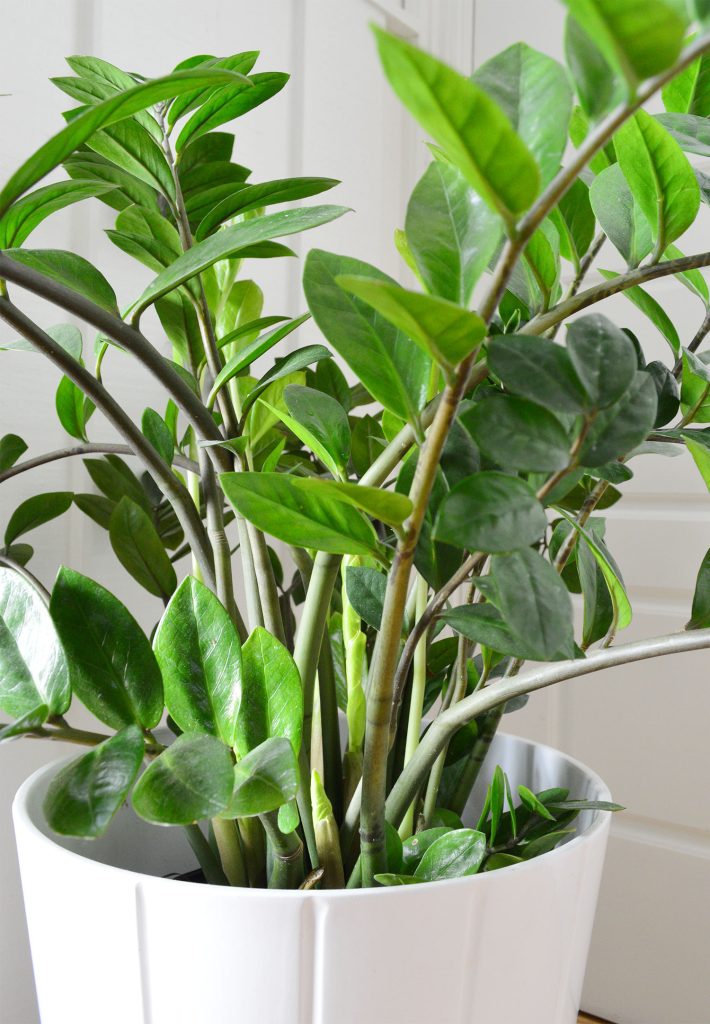
ZZ plants grow from rhizomes under the soil, which look like small potatoes and help them store water during periods of drought. The “stem” of the ZZ plant is its leaf, similar to how we think of a palm leaf or fern leaf. The bare lower part of this stalk is called the petiole and the upper portion covered in leaflets is called the rachis. The glossy leaflets grow in pairs. We’ll talk about propagation more later, but ZZ plants can be propagated from cuttings at the petiole, rachis, or leaflet.
What Are Other Names For A ZZ Plant?
The ZZ plant gets its name from the initials of its Latin botanical name: Zamioculcas zamiifolia. This name is the most commonly used, but it also goes by several other nicknames:
- Zanzibar Gem
- Zuzu Plant
- Emerald Palm
- Eternity Plant
That last nickname, the Eternity plant, references its hardiness – they seem to live forever! For that reason, some people also see it as a symbol of endurance, prosperity, and a long life.
How to Care For A ZZ Plant
ZZ plants are a great beginner house plant because you don’t need too put much thought into them. But here are a few care tips to keep it looking its best.
Light
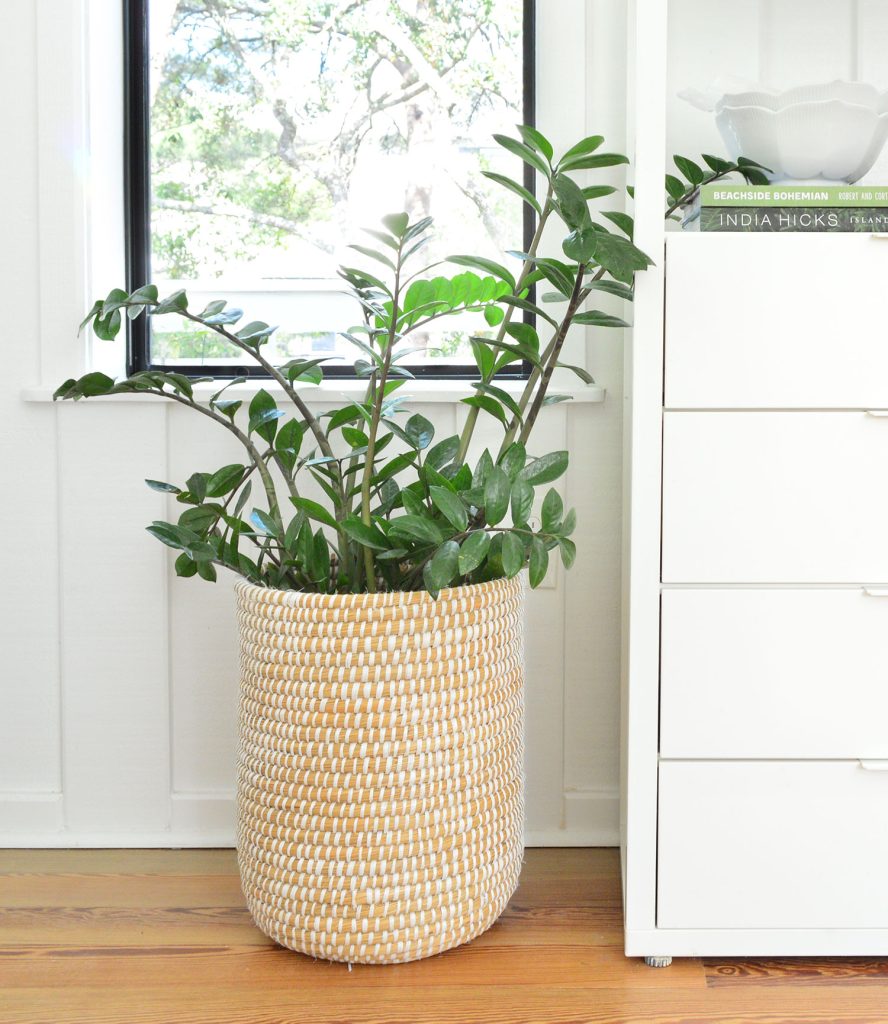
ZZ plants do best in medium-to-bright indirect light, but can also be kept in low light conditions. They can even survive under only fluorescent or artificial light! However, the sunnier the location, the faster and larger it will grow. Just avoid spots with lots of direct sun, since this can burn its leaves.
Watering
Try to water your ZZ plant once every 2-3 weeks in the spring and summer, and once a month in the fall and winter. They don’t like sitting in water, so don’t water it if the soil is still moist. Remember, ZZs are drought tolerant (thanks to its underground rhizomes that store water) so it’s best to underwater, not overwater, this houseplant.
Soil & Repotting
A standard potting mix works well for ZZ plants, provided they drain well. ZZ plants can also tolerate being slightly rootbound, so they don’t need to be repotted as frequently as other houseplants. They should be happy in their existing pot for 2-3 years before you need to repot into a larger pot. Make sure any pot has good drainage holes. While repotting, consider using one of its rhizomes to propagate a new plant!
Temperature & Humidity
ZZ plants do well in average household temperatures and humidity levels so don’t overthink this part. They prefer temperatures of 65°F to 75°F and can sustain damage under 50°F. They do best in 40-50% humidity levels, which mimic their native environment. But they can also tolerate drier air.
Pruning
We don’t prune our ZZ plants often, apart from clipping portions that are getting too long or leggy. When pruning a ZZ, use clean sharp scissors to make a 45-degree cut right above a node (where a leaf meets the stem). If removing a whole stem, cut the petiole close to the soil line. This can help control the size and shape of your plant. You can also use clipped portions to propagate a new plant!
Fertilizer
During its spring & summer growing season, consider adding a balanced fertilizer once a month. These houseplant tablets are easy to drop into your watering can.
Dusting
Like all houseplants, ZZ plants benefit from semi-regular wiping of their leaves. Removing dust helps maintain their bright shiny look and also promotes photosynthesis. A microfiber cloth, damp paper towel, or special plant wipes are great for this task. It can be a bit tedious with a ZZ like ours that has lots of leaves!
How to Propagate ZZ Plants
There are several ways to propagate your ZZ plant into new plants. This is a great free way to grow a new ZZ for yourself or a friend. Since they’re such easy beginner-friendly plants they make the perfect plant gift!
- Division: While repotting your ZZ plant, separate any of its potato-like rhizomes that grow underground. These can be planted in new pots to create new ZZ plants.
- Stem Cutting: Use a cut or broken portion of the petiole or rachis. Try to choose a section with at least 3-5 leaflets above your cut. For a petiole cutting, try to cut close to the soil line. Stick the cut end in water, making sure no leaves are submerged. New roots and rhizomes should develop in a few months. Once roots are at least 1″ long, pot your cutting in soil.
- Leaf Cutting: You can also use individual ZZ leaflets, cut right above the node, to grow new roots and rhizomes. It’s best to take several leaves at a time, stick them in shallow soil, and water anytime the soil is fully dry. After several months, they should begin to grow upwards.
Common Issues
Like all houseplants, ZZ plants are susceptible to some common issues. Here’s what to look out for:
- Yellow leaves: You could be overwatering or underwatering your ZZ. If your soil is still moist, it’s likely overwatered. Adjust your watering schedule accordingly. Yellowing could also be a sign of too much direct sunlight.
- Root rot: If you notice a foul odor or yellowing stems, your ZZ could be sitting in water, which causes root rot. Some plants can’t recover from this, but you can repot into fresh soil and remove dead roots as you go. Be sure to use a well-draining soil to prevent future rot.
- Pests: ZZ plants can attract common houseplant pests like aphids, gnats, mealybugs, spider mites, and more. Look for damaged spots, wilting leaves, or webs. Most pests can be removed by hand and then treat the plant with neem oil.
- Browning tips: This may be a sign of overfertilization, so cut back on any fertilizer you have been adding to your ZZ.
Other ZZ Plant FAQs
Are there other ZZ plant varieties?
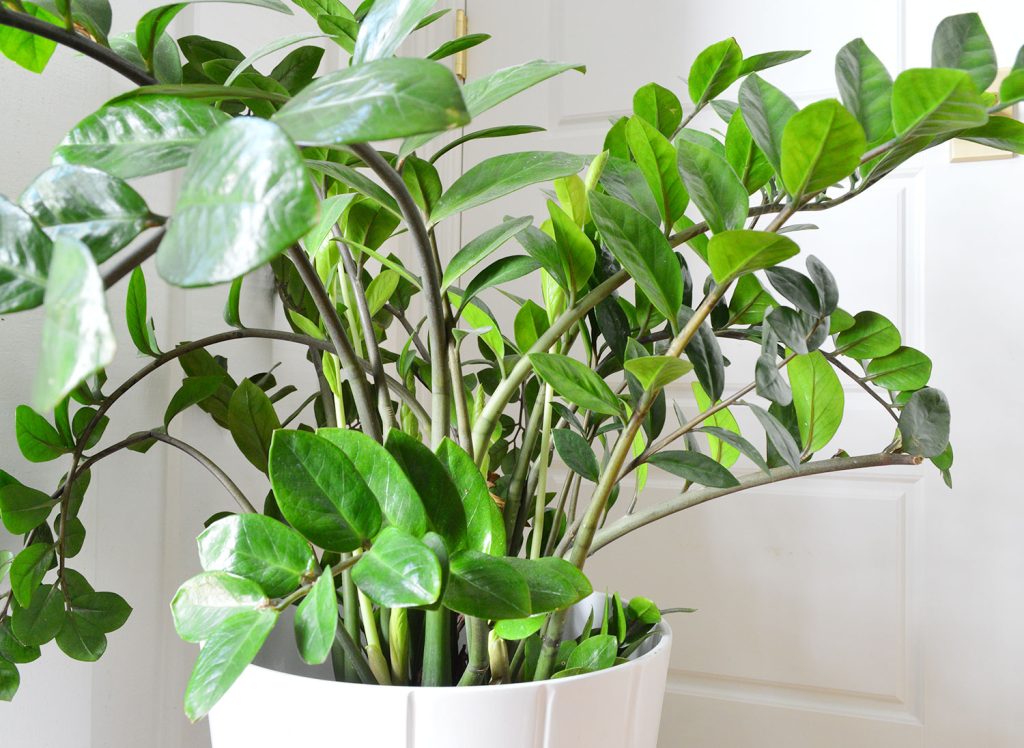
There are a few varieties of ZZ plant beyond the standard version pictured here. The two most common varieties are the Raven ZZ (Zamioculcas zamiifolia ‘Raven’) and Zeni ZZ (Zamioculcas zamiifolia ‘Zeniz’). The Raven ZZ, also called Black ZZ or Supernova ZZ, is a version with dark, nearly black leaves. The Zenzi ZZ is a dwarf version that only grows about 12″ tall.
What does the ZZ plant symbolize?
ZZ plants are thought to symbolize prosperity, endurance, and longevity. It is called the Eternity Plant, after all! In Feng Shui, it’s also thought to bring luck, good fortune, and stability. This is another reason it’s popular in homes and office spaces alike, beyond its general durability and resilience.
Are ZZ plants toxic to cats?
Although ZZ plants aren’t usually included in lists of toxic houseplants, they can cause discomfort when ingested by cats, dogs, or humans. They are not considered highly toxic or lethal, but their leaves and stems do contain calcium oxalate crystals that can irritate skin, mouths, and stomachs. This may cause them to drool, vomit, or experience other gastrointestinal distress. It’s best to keep ZZ plants away from curious pets or children.
More Plant Guides
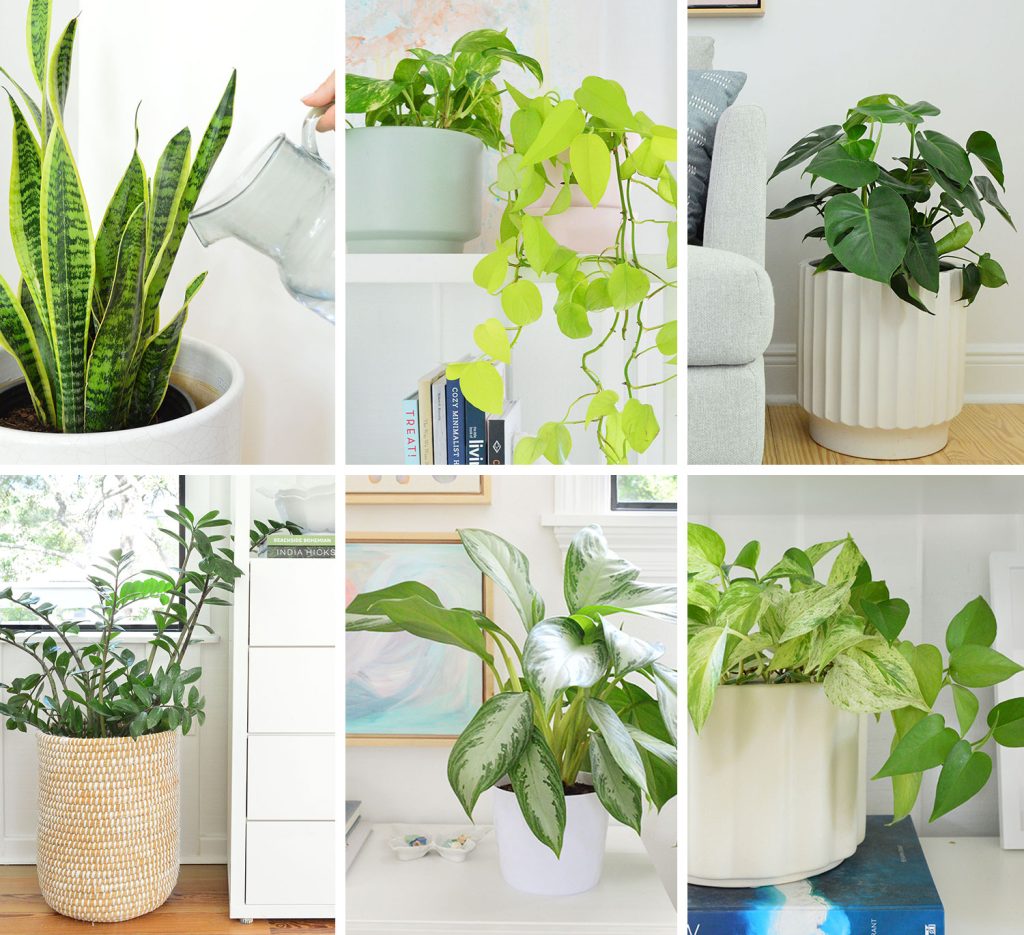
If you’re looking for more information on some of our favorite plants (real and faux!) check out some of these posts below:
*This post contains affiliate links, so we may earn a small commission when you make a purchase through links on our site at no additional cost to you.