

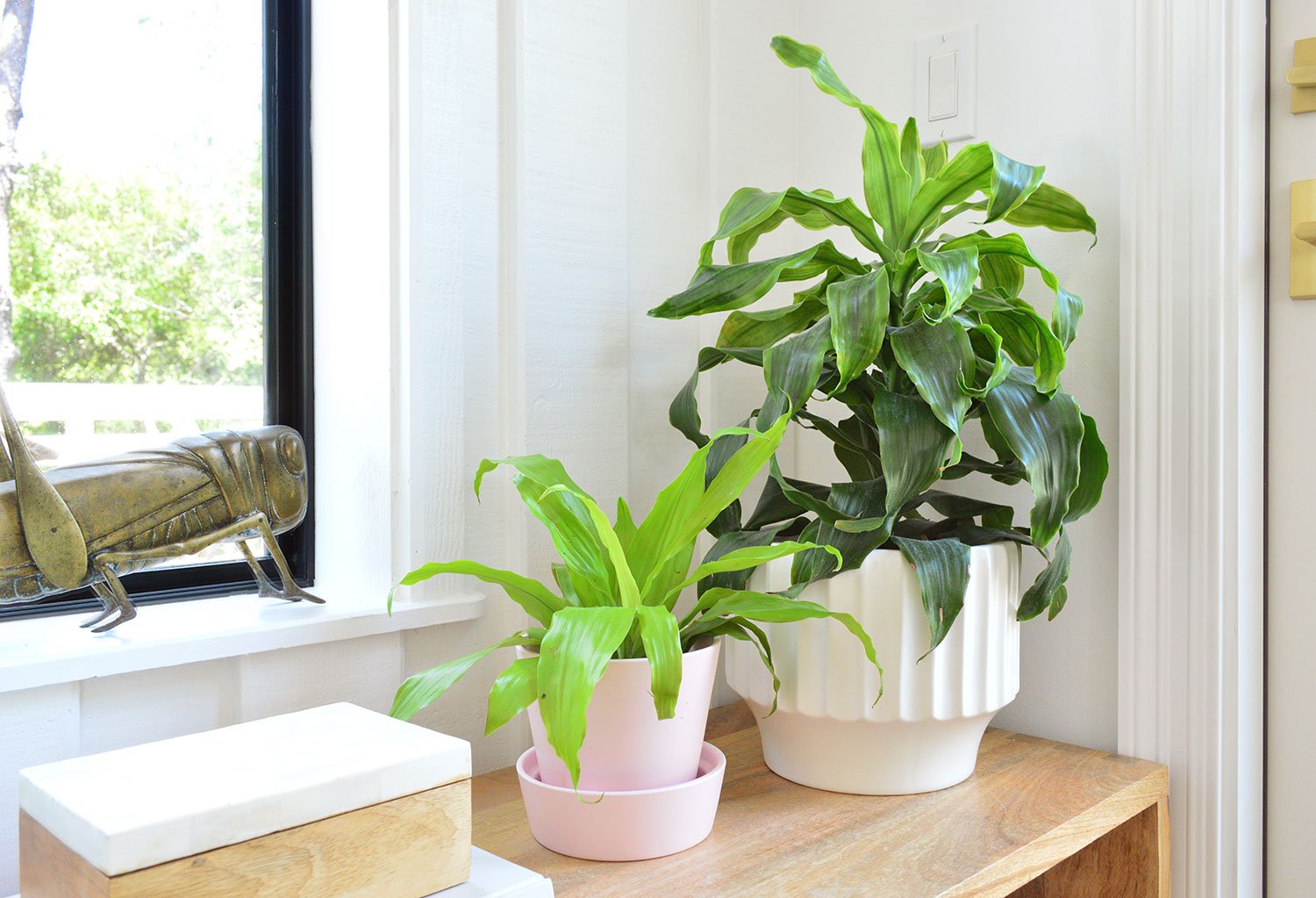
Corn plants (Dracaena fragrans) are popular low-maintenance houseplants you’ve probably seen at the nursery, home improvement store, or doctor’s office. I even had one in my college dorm room! You can recognize them by their spear-shaped leaves and woody, cane-line trunks that can grow up to 6 feet tall indoors. But did you know there are several varieties of corn plants? We didn’t! Heck, we didn’t even realize some of our smaller houseplants were in the same corn plant family!
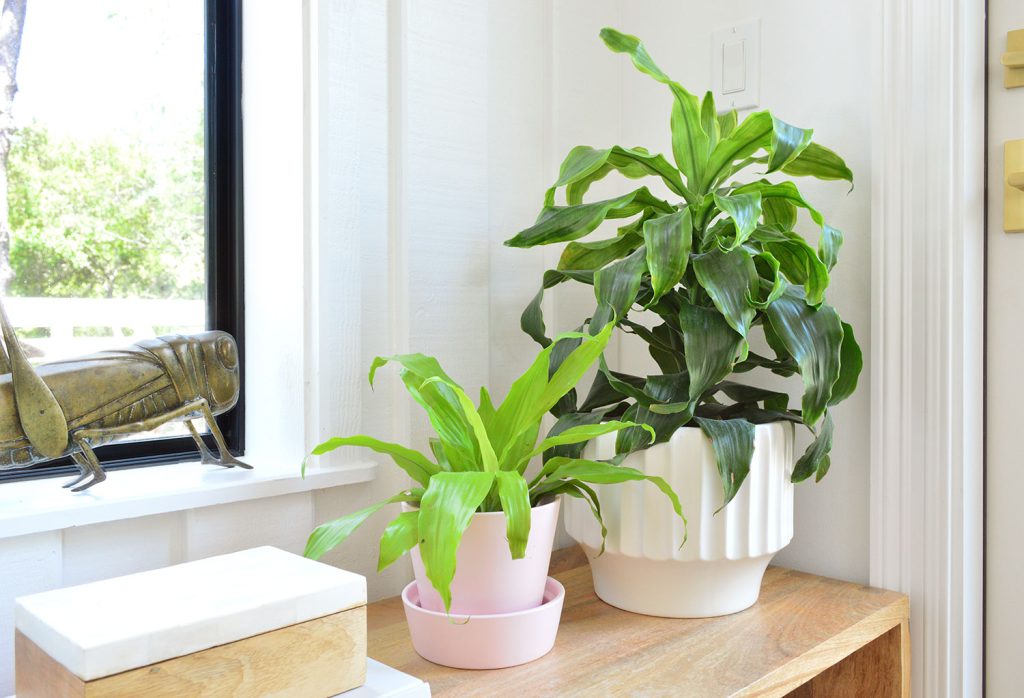
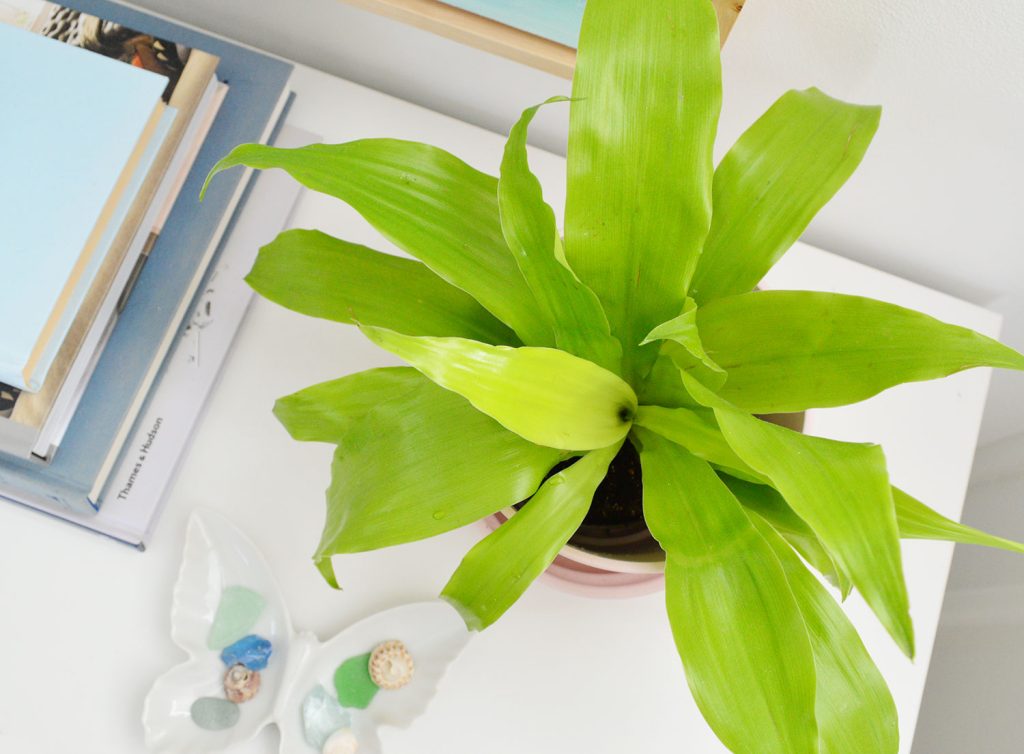
Currently, we own two smaller varieties of corn plants, pictured above. The one on the left is a Dracaena Limelight (Dracaena fragrans ‘Limelight’) and the taller plant is a Draecanea Dorado (Dracaena fragrans ‘Dorado’). We actually have several limelights around because we love their vibrant color on shelves, tabletops, and windowsills.
Corn Plant Quick Facts
- Latin name: Dracaena fragrans
- Common names: Corn plant, cornstalk plant, false palms
- Light: Bright, indirect light but can tolerate lower-light conditions
- Watering: Keep soil moist, but not soggy. Water if the top 2″ of soil is dry.
- Soil: Loose, loamy soil with good drainage
- Mature size: Up to 6ft tall indoors
- Ideal Humidity: Average household humidity, ideally 40-50%
- Ideal Temperature: 65-75º
- Cold Hardiness: USDA Zones 11-12
- Native to: Tropical Africa
What Is A Corn Plant?
Household corn plants aren’t the same as the sweet corn crop you find on farms, but they were named for their similar-looking leaves. Instead, corn plants are related to asparagus and are members of the Dracaena genus (pronounced dra-SEE-nuh). This broad category of houseplants also includes snake plants, dragon trees, and lucky bamboo. Dracaena typically have grassy or spear-shaped leaves that grow from a sturdy center stalk. They are slow-growers, but can reach over 6ft in height in the right conditions. Because of this, plus their thick trunks and tropical leaves, they’re sometimes called “false palms.”
I’ll admit that we’re not huge fans of the traditional corn plant, because we prefer fuller and more bushy houseplants. But they are definitely great options if you want a hardy, tall plant that looks more tree-like. That’s why in our home we tend to keep the smaller versions around.
Types of Corn Plants
Like most houseplants, several varieties or “cultivars” of corn plants have been bred over time. The original species (Dracaena fragrans) isn’t even that common anymore! Here is a list of some others that you may find.
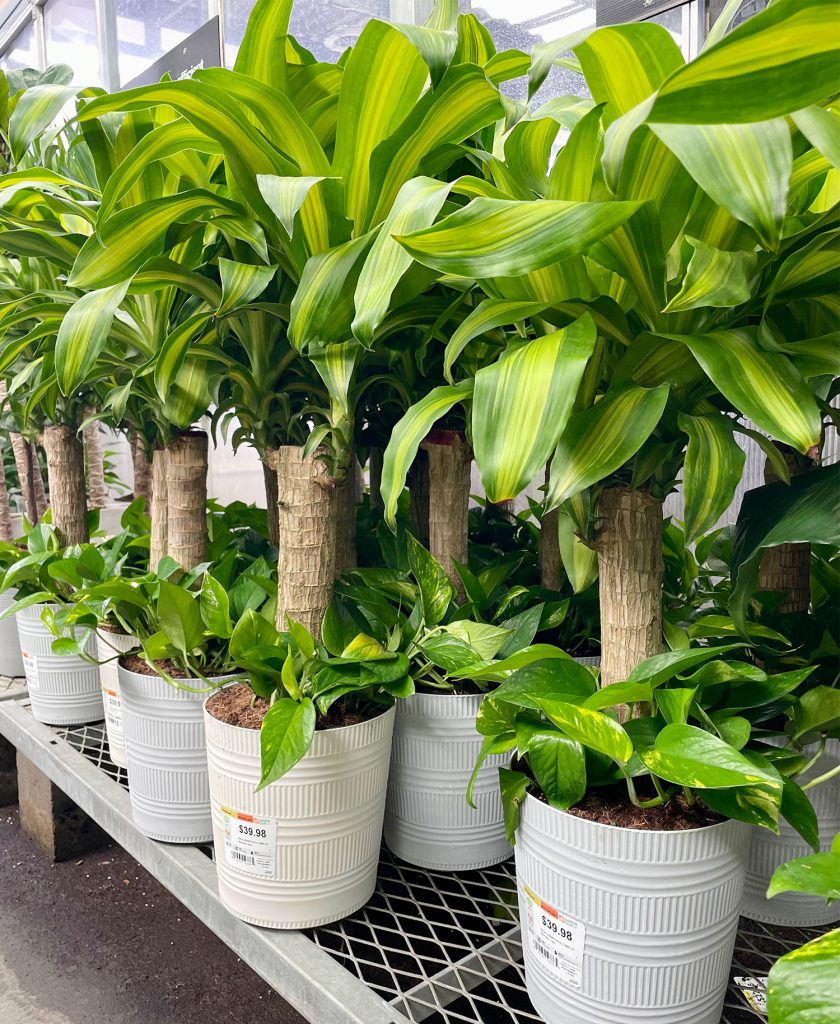
- Dracaena fragrans ‘Massangeana’ (pictured above, with golden pothos at base): This is the most common variety, sometimes called the Mass Cane. Like the OG corn plant, it has a thick, woody trunk with lush foliage. The key difference is that the Massangeana leaves have yellow stripes down their center instead of being solid green. You can typically find them sold in pots with 2 or 3 trunks, already 1-2 feet in height.
- D. fragrans ‘Lindenii’: Also similar to the Massangeana variety, but the yellow striping is found toward the edges of the leaves.
- D. fragrans ‘Victoria’: Again, similar to the Massangeana, but with smaller, wider, and more triangular leaves. It also tends to be more compact. This variety is hard to find.
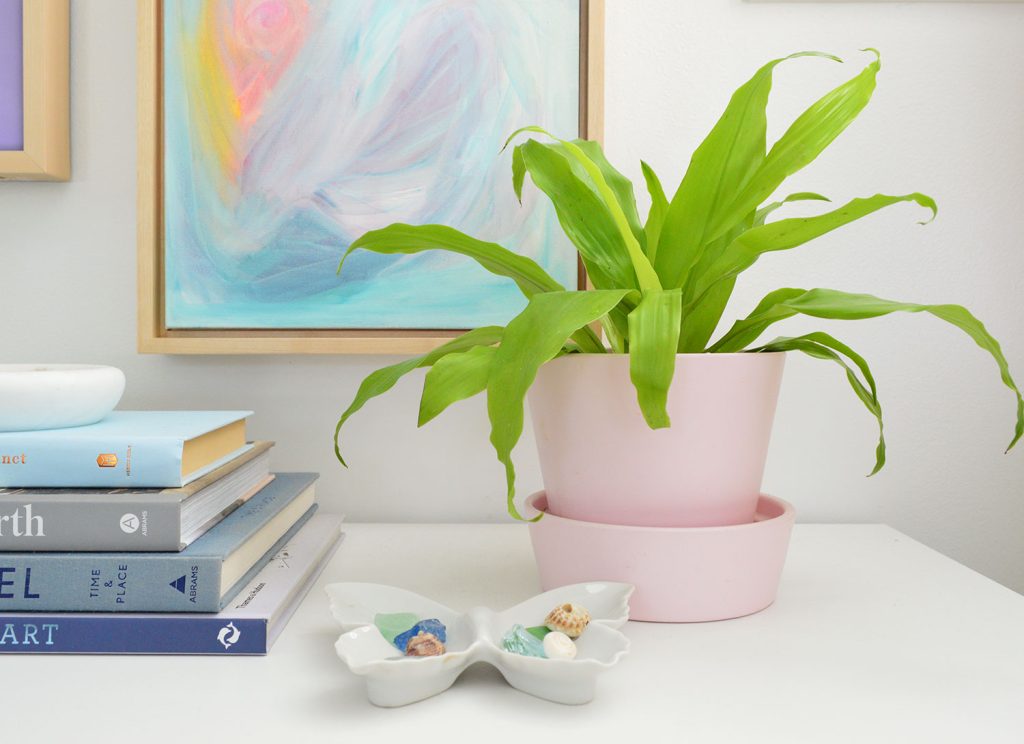
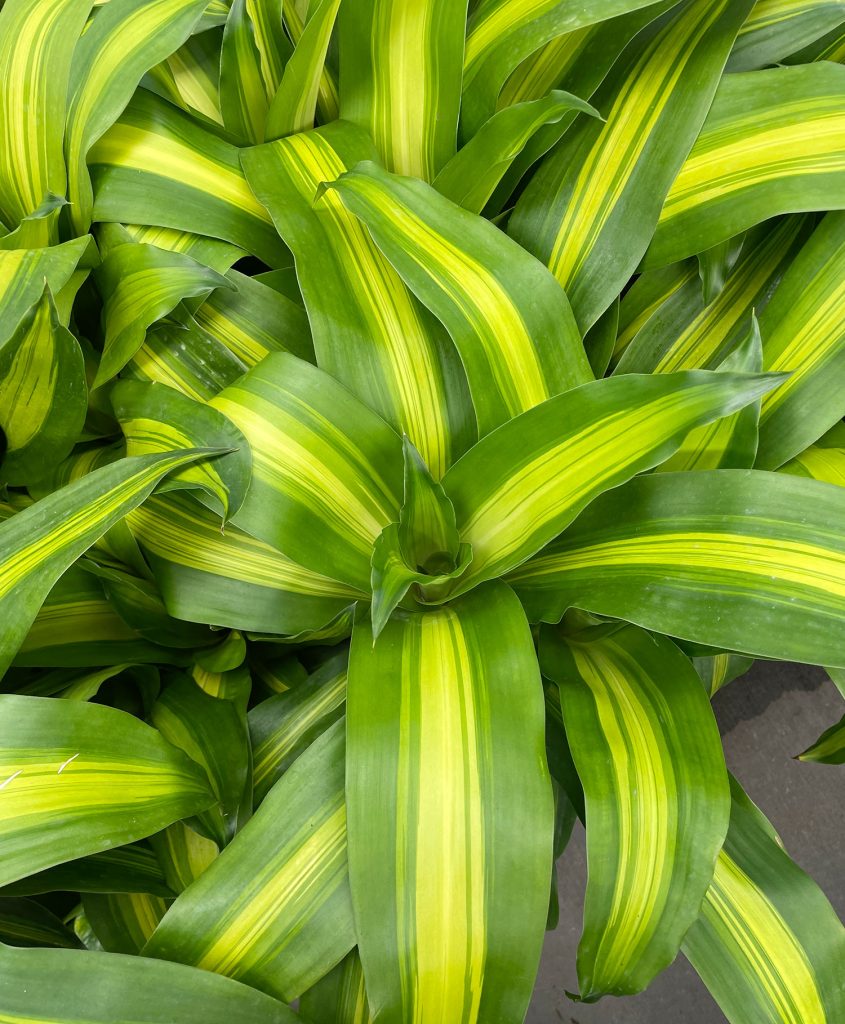
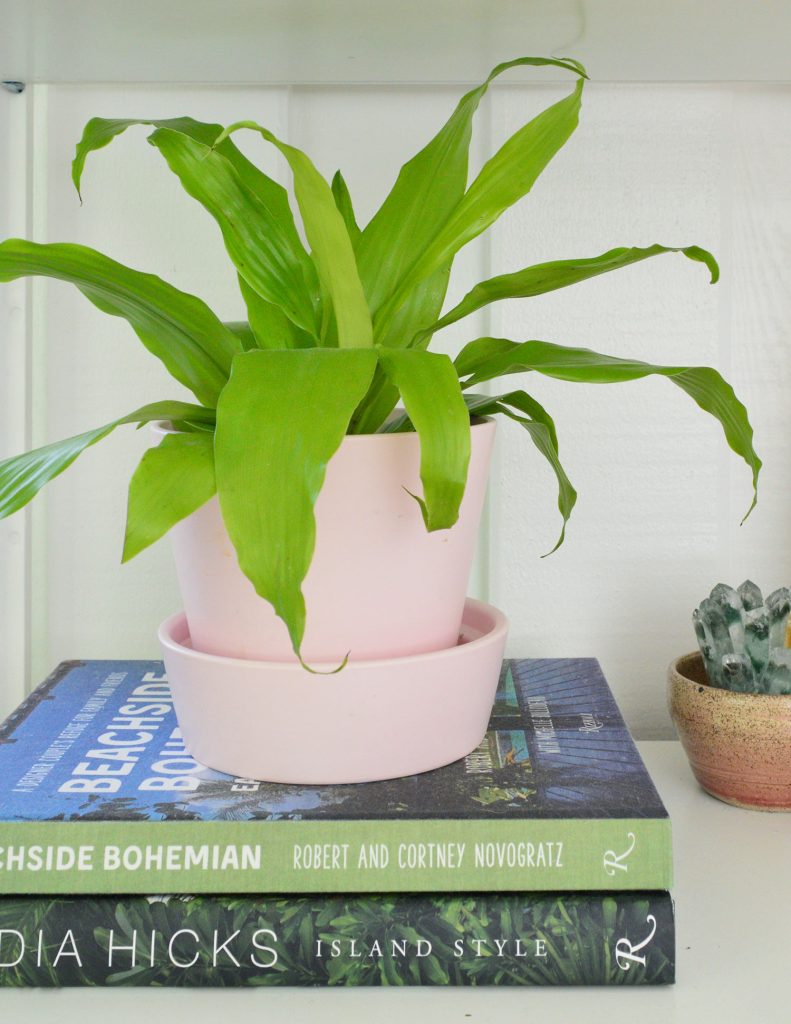
- D. fragrans ‘Limelight’: (Pictured above) Known for its bright, yellow-green leaves that tend to be a bit narrower. The leaves brighten as they mature
- D. fragrans ‘Lemon Lime’: Similar to the Limelight shown above, however the yellow-green leaves feature a darker green stripe down the middle.
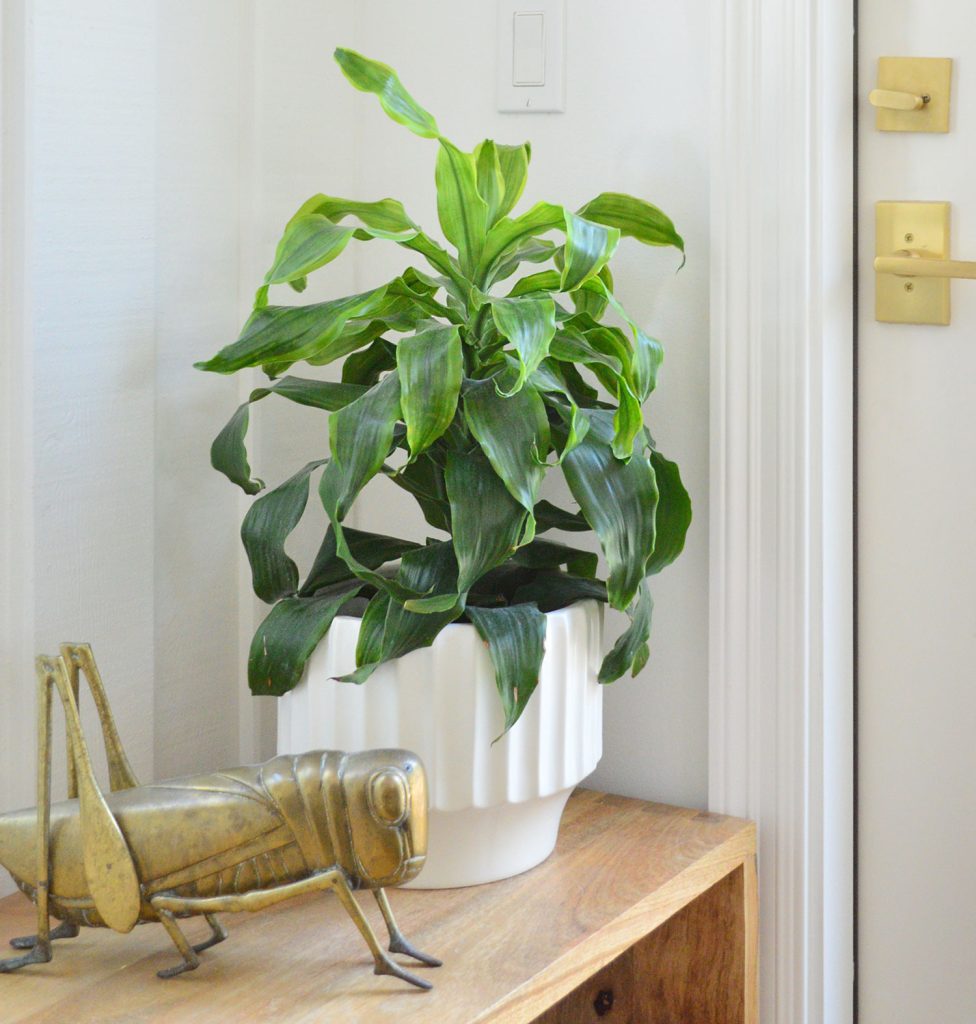
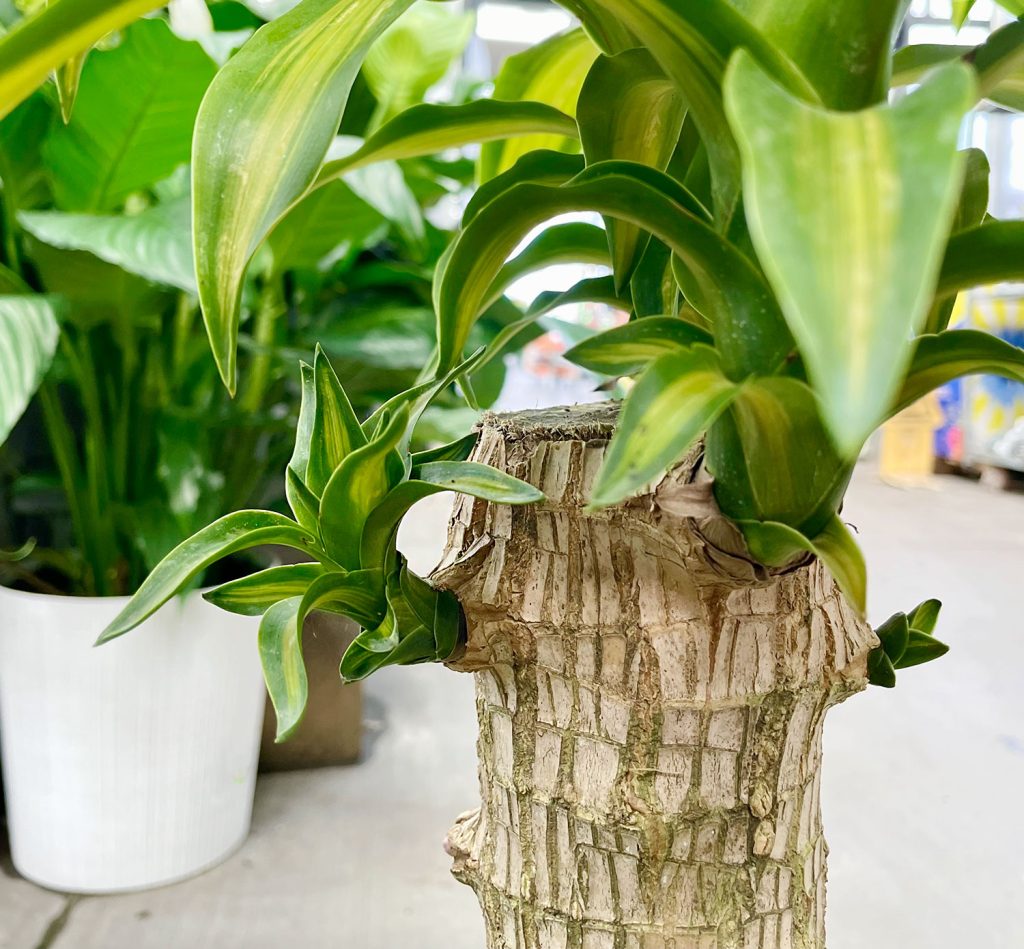
- D. fragrans ‘Dorado’ (Pictured below): The deep green leaves on this variety are known to curl back towards the center, for a denser appearance. They may have lighter green striping on the outside of the leaves.
How To Care For A Corn Plant
Light
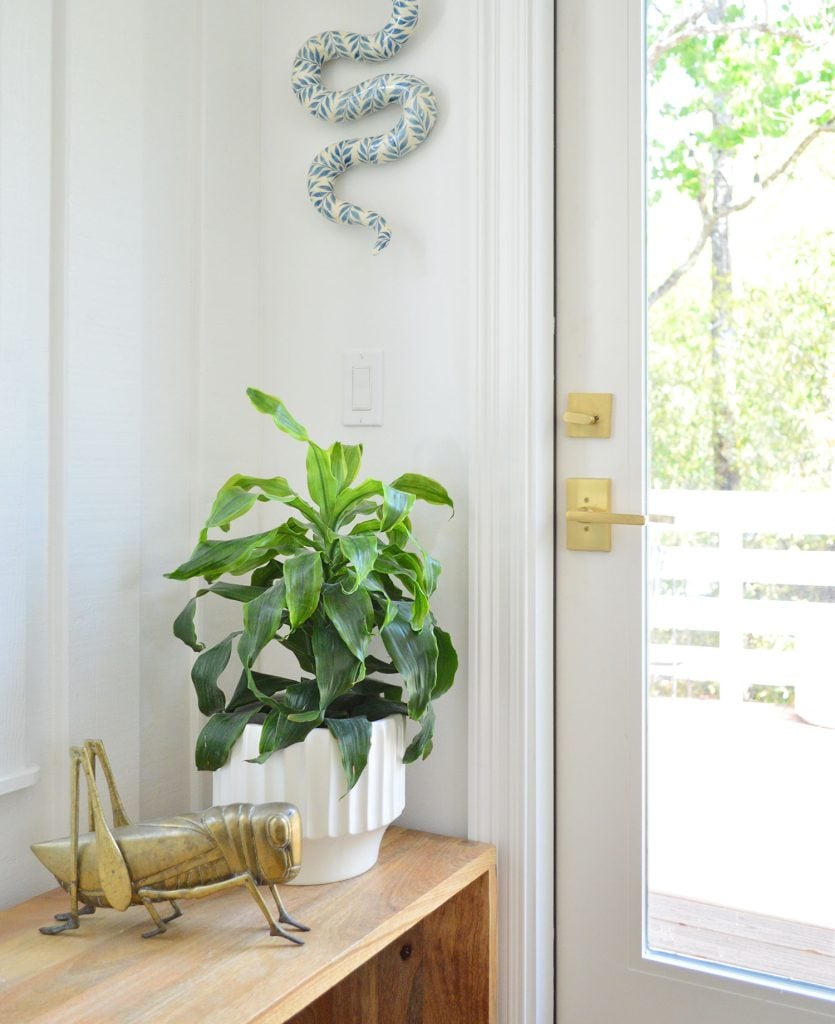
Corn plants do best in bright, indirect light. They can survive in lower light conditions but may lose some of their bright color or variegations. We’ve found that ours do best near windows, but not where they will get too much direct sunlight. This can cause their leaves to burn.
Water
Corn plants require slightly more active watering than some of our other easy houseplants. They prefer soil that is moist, but not too soggy. This means you should try to keep the top 1″ of soil damp, and add water if it has dried out. Just be careful not to overwater and be sure your pot has drainage holes. You can also cut back on water in the fall and winter, when the plant is not actively growing. Some corn plants can be sensitive to chemicals in tap water, so consider filtered water instead.
Soil
Choose soil that drains well (most standard potting soil will do) and consider mixing in some perlite or vermiculite. These help retain soil moisture and ensure a loose, well-draining mix. Also, make sure your pot has a hole to less excess water escape so that your corn plant’s roots don’t sit in water.
Temperature & Humidity
Since corn plants prefer temperatures between 65-75º and humidity around 40-50%, they should do well in most home environments. They can also be kept outdoors in containers, just bring them in when temperatures drop below 50º. You can also increase the humidity by adding a humidifier or sitting the pot on a pebble tray with water.
Pruning
Lower leaves on your corn plant will naturally yellow and die over time. You can remove these by hand, or with clean, sharp shears. You can also remove the top portion of the plant to control its height. Use those shears to cut its stem or “cane,” and new growth should continue from that point.
Fertilizer
During its spring & summer growing season, consider adding a balanced fertilizer once a month. These houseplant tablets are easy to drop into your watering can.
Propagating A Corn Plant
Anytime you prune a corn plant, your stem cutting becomes a great opportunity to grow a new plant. Here’s how to propagate your dracaena:
- Step 1: Use clean, sharp shears or pruners to cut a 8″ section or more from the top of the stem. Remove lower leaves to expose the stem and consider cutting it at an angle to expose more surface area.
- Step 2: Submerge the cut end in clean water, preferably in a clear glass. Make sure no leaves are submerged. Place the glass in a bright spot.
- Step 3: Change water every week or two to discourage algae or bacteria growth, and top off any loss due to evaporation. You should see roots begin to form within a few weeks.
- Step 4: Once at least 1″ of roots have grown, transfer your cut stem to a small pot with well-draining soil. Continue to care for your new plant as usual!
Common Issues
Some of our corn plants have been perfectly behaved and practically thrive on neglect, but others have been problem children. So while they are generally low-maintenance, here are some common problems to look out for:
- Pests: Corn plants are susceptible to common houseplant pests like spider mites, mealy bugs, or fungus gnats. Most of these pests can be removed with a damp cloth or a neem oil application, which will help prevent future infestations.
- Yellow leaves: Yellow leaves are typically a sign of overwatering, but may also just be part of the natural life cycle of the leaf. Check the drainage of your pot and consider reducing your watering.
- Brown leaves or tips: This could indicate underwatering or low humidity. Make sure to keep the top 1″ or 2″ of soil moist. If your soil no longer holds moisture well, consider repotting with fresh, loose soil.
- Dry spots or patches: Your corn plant may be getting too much direct sunlight, which is burning the leaves.
- Foul odor or sudden leaf dropping: Overwatering may have caused root rot. Remove the plant from the pot and inspect the roots. Remove dead or rotted roots, and repot in fresh soil. Some plants become unsalvagable at this point.
- Curling or spotted leaves: Corn plants can be sensitive to chemicals in tap water such as chlorine or fluoride. Try using distilled water or let your tap water sit out for an hour before watering to allow those chemicals to dissipate.
Other Corn Plant FAQs
Are corn plants toxic to cats and dogs?
Corn plants are toxic to pets because they contain saponins, which can cause vomiting, loss of appetite, and shortness of breath. Consult with a veterinarian if you believe your cat or dog has ingested any part of your plant. It’s best to place these out of reach of any animal or curious child who may nibble on your corn plant.
How tall does a corn plant get?
In nature, corn plants can grow as tall as 50 feet! However, they are unlikely to grow much taller than 6 feet tall in an indoor container. Most corn plants grow closer to 3-4 feet. They are slow growers though, so be patient!
Can corn plants survive outside?
Corn plants are rated for USDA Hardiness Zones 11 and 12 which excludes all of the continental United States. If you’d like to keep a corn plant outdoors, put it in a container that can be brought inside when temperatures drop below 50º. Keep it in partial shade to prevent burned leaves.
Do corn plants flower?
Technically, yes, but rarely in indoor conditions. Some very happy, mature house plants may produce fragrant white flowers periodically – even several years apart.
More Plants We Love
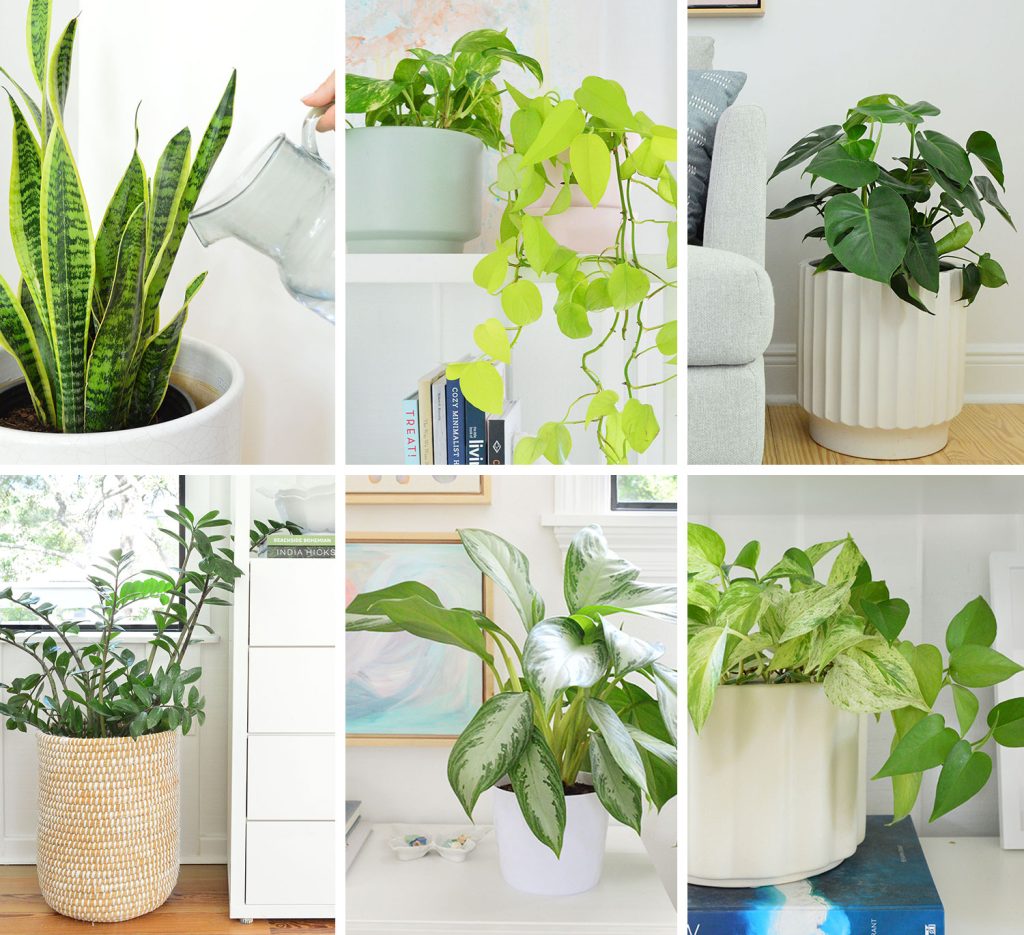
If you’re looking for more information on some of our favorite plants, check out some of these posts below:
*This post contains affiliate links, so we may earn a small commission when you make a purchase through links on our site at no additional cost to you.